


There is a version of luxury travel experiences that most people picture and quietly dismiss as something reserved for someone else, someone with a different income bracket, a different life. Private jets, butler service, rooms with their own infinity pools overlooking the sea. And while those things do exist, they represent only the most visible corner of a much broader category.
Genuine luxury travel experiences are less about spending the most money possible and more about gaining access to something you simply cannot get any other way, whether that is a private guided tour of a place most tourists never reach, a meal prepared by a chef who has spent a lifetime mastering a single regional cuisine, or a stay in a property so well-designed and so thoughtfully run that it changes how you think about hospitality altogether.
The market for these experiences has grown significantly in recent years, driven by a shift in how affluent and aspirational travelers think about what they want from a trip. Spending on experiences has, broadly speaking, outpaced spending on material goods among higher-income consumers for over a decade. The luxury travel sector reflects that shift directly.
What Luxury Travel Experiences Actually Mean Today
The definition has evolved. A decade ago, luxury travel was largely synonymous with five-star hotel brands, first-class cabin upgrades, and high-end resort packages. Those things still exist and still attract a loyal market. But a growing segment of travelers now defines luxury differently: as access, exclusivity, and depth rather than thread counts and room service menus.
A private wildlife safari in a remote conservation area, with a camp that accommodates fewer than twenty guests at a time, offers something a five-star city hotel cannot replicate. A sailing itinerary through islands with no commercial cruise presence gives a traveler a fundamentally different relationship with a destination than a standard package tour. Chartered train journeys across mountain routes, immersive culinary stays at working farms, and ultra-small-group expeditions to genuinely remote destinations have all carved out significant space in the luxury travel category.
What connects these luxury travel experiences is not necessarily price, though many are expensive. It is the sense that something rare and irreplaceable is being offered, something that required expertise and relationships and careful curation to make available.
The Destinations Redefining High-End Travel
Certain destinations have established themselves as natural homes for elevated travel experiences, combining extraordinary natural settings with a hospitality culture that takes the craft seriously.
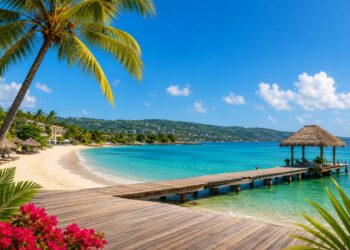
The Maldives remains one of the most sought-after destinations for overwater accommodation, offering a level of privacy and visual drama that is difficult to replicate anywhere else. Properties here have invested heavily in sustainability in recent years, with some operating on near-zero-waste principles without compromising on the quality of the guest experience.
In East Africa, countries like Tanzania, Kenya, and Rwanda have built world-class safari and conservation travel infrastructure. The best properties in the Serengeti or Maasai Mara are not merely comfortable places to sleep between game drives. They are designed to place guests as close as possible to the natural environment, with guides whose knowledge of the land and its wildlife represents a lifetime of accumulated expertise. These are luxury travel experiences that are genuinely educational as much as they are indulgent.
Japan occupies a category of its own. The country’s tradition of omotenashi, a philosophy of hospitality centered on anticipating a guest’s needs before they are expressed, has produced a category of traditional inn, the ryokan, that offers some of the most distinctive luxury travel experiences available anywhere. A high-end ryokan in Kyoto or the Hakone mountains combines exceptional cuisine, architectural beauty, and a standard of attentive service that most Western luxury hotels spend considerable effort trying to approximate.
Closer to Europe, the Amalfi Coast, the Greek islands, and the Portuguese Alentejo region have all seen significant investment in boutique luxury properties that prioritize design, local culture, and the quality of the table over sheer scale. These are destinations where the luxury travel experience is woven into the landscape itself.
How to Access Luxury Travel Experiences Without Overpaying
Cost is real, but luxury travel does not require approaching it carelessly. A few deliberate choices consistently produce better value without diluting the quality of the experience.
Traveling in shoulder season, as with any category of travel, makes a meaningful difference. A luxury property in Tuscany in late September or early October offers the same quality of accommodation, food, and landscape as it does in August, typically at a lower nightly rate and with considerably fewer guests. The experience often improves even as the cost drops.
Working with a specialist travel advisor rather than booking directly through a hotel website or a general booking platform is a widely underused approach. Advisors who focus specifically on luxury and experiential travel often have preferred partner relationships with properties, which can translate into room upgrades, inclusions like dining credits and spa access, and early check-in or late check-out, all at the same rate the traveler would pay booking independently. The advice itself typically costs nothing, as advisors are compensated by the properties.
Prioritizing one or two genuinely exceptional experiences per trip, rather than spreading budget across a longer itinerary of mid-range options, also tends to produce more memorable results. A single night in a truly exceptional property or a single half-day private experience with an expert guide can anchor a trip in a way that three additional nights in a competent but unremarkable hotel cannot.
Why the Investment Tends to Hold Up
Research on how people recall and value experiences consistently shows that the quality of peak moments within a trip, rather than its overall average quality, tends to drive long-term satisfaction. A single extraordinary day, a meal that exceeded all expectations, a landscape encountered without a crowd, anchors the memory of a trip in ways that a uniformly comfortable but unremarkable week simply does not.
Luxury travel experiences, at their best, are engineered precisely around those peak moments. The best operators in this space understand that their guests are not simply purchasing accommodation or transport. They are purchasing a story worth telling, and a memory worth keeping.
That is a different kind of value proposition than a good price-to-quality ratio. And for the travelers who have experienced both, it is rarely a difficult comparison to make.