


The commercial aviation experience has not improved in any meaningful way for the majority of passengers in several decades. The airports are larger, the security lines are longer, the seats are narrower, and the distance between booking a ticket and actually arriving somewhere useful has stretched to accommodate a process that treats every passenger as a problem to be managed rather than a traveler to be served. The miracle of flight, which should register as extraordinary every time it happens, has been so thoroughly industrialized that most frequent flyers board aircraft with the same emotional engagement they bring to a commuter train.
Private jet travel exists in direct opposition to every element of that experience. No terminal queues, no middle seats, no connections designed around airline hub economics rather than passenger convenience. A departure from a fixed base operator terminal that takes minutes rather than hours. A cabin configured for the specific group traveling rather than the maximum number of bodies an aircraft can contain. Arrival at airports that commercial aviation does not serve, placing travelers closer to their actual destination rather than a regional hub requiring onward ground transport. And the particular quality of time that a private cabin produces: genuinely productive, genuinely restful, or genuinely social, depending on what the journey requires.
The private jet travel market is larger, more varied, and more accessible than most people who have not used it assume. Understanding what the category actually contains, how it is priced, and which access model suits which traveler is the starting point for anyone considering making it part of how they move through the world.
What Private Jet Travel Actually Delivers
The advantages of private jet travel organize themselves into two categories: the elimination of what commercial aviation imposes and the provision of what it structurally cannot offer.
The eliminations are the ones most people think of first. No check-in queues. No security theater involving the removal of shoes and the confiscation of liquids. No gate holds, boarding group announcements, or the particular indignity of the middle seat. No connection risk, no lost luggage because there is no checked luggage infrastructure, and no arrival at a major hub airport that requires further ground transport to reach the actual destination. For travelers who fly frequently and measure the true cost of commercial aviation in hours of life consumed by process rather than dollars spent on tickets, these eliminations have a value that is not captured by any fare comparison.
The provisions are what experienced private jet travelers tend to cite as the more significant differentiator once the novelty of the eliminations has normalized. Scheduling on your own timeline rather than around airline timetables. The ability to change departure times with hours of notice rather than days. Access to approximately five times as many airports as commercial aviation serves in the United States alone, and a comparable expansion of accessible airports in Europe and other developed aviation markets. A cabin environment in which work conversations can be conducted without concern for adjacent passengers, in which documents can be reviewed without the physical compression of economy seating, and in which the group traveling can function as a unit rather than as individuals tolerating proximity to strangers.
For business travelers, the productivity argument for private jet travel is frequently the most financially defensible framing. A senior executive whose time has a quantifiable hourly value, traveling with colleagues for whom the flight itself is a working session, recovers a portion of the cost differential through productive hours that commercial travel would have consumed in process. This calculation does not justify private jet travel for every business trip or every executive, but it is a genuine consideration for high-frequency travelers in time-sensitive roles, and it explains why corporate aviation has remained a substantial market even through periods of significant cost pressure on corporate travel budgets.
The Access Models: How Private Jet Travel Is Actually Used
The private jet travel market offers several distinct access models, each with different economics, flexibility profiles, and suitability for different usage patterns. Understanding which model fits a given traveler’s frequency, route mix, and budget produces a significantly better outcome than approaching the market without this framework.
Whole aircraft charter is the most straightforward access model: a traveler or group pays for the use of a specific aircraft for a specific trip, without any ongoing commitment or membership relationship. Charter is the right model for travelers who use private jet travel occasionally, for specific trips where the value proposition is particularly clear, rather than as a regular travel format. The cost is transparent, the commitment is limited to the specific booking, and the range of aircraft available through charter brokers spans from light jets suitable for short hops between regional airports to ultra-long-range heavy jets capable of transatlantic and transpacific flights without intermediate stops.
Fractional ownership, pioneered by NetJets in the United States and subsequently adopted by operators in Europe and other markets, involves the purchase of a share in a specific aircraft, typically expressed as a fraction of the aircraft’s annual flight hours. Fractional owners have guaranteed access to an aircraft of their category within a defined notice period, and the operating costs of flights are charged separately from the capital cost of the share. This model suits travelers who fly enough to justify the capital commitment of share ownership, who value the consistency of a defined aircraft type and operator relationship, and who want guaranteed availability rather than the market-dependent access that charter provides. The entry cost is substantial, and the liquidity of fractional shares when an owner wishes to exit varies between programs.
Jet card programs have become the most widely used access model among frequent private jet travelers who do not want the capital commitment of fractional ownership. A jet card involves prepaying a defined number of flight hours, typically between 25 and 100 hours, at a fixed or capped hourly rate, with access to an operator’s fleet within a defined aircraft category. The model provides more pricing certainty than on-demand charter, more flexibility than fractional ownership, and a lower entry commitment than either. The proliferation of jet card programs has made the model the de facto standard for the high-net-worth individual market, and the competitive dynamics between providers have improved terms and pricing relative to the early years of the category.
Membership programs operated by on-demand charter technology platforms, including Wheels Up, Surf Air, and their equivalents in various markets, represent a more recent model that uses technology to aggregate demand, optimize fleet utilization, and offer access to private jet travel at price points below traditional charter and fractional ownership. These programs have expanded the addressable market for private jet travel to include travelers whose flight frequency or budget would not have justified traditional access models, and they have introduced competitive pressure on incumbent operators that has broadly benefited consumers across the market.
Aircraft Categories and What They Mean
The private jet travel market organizes aircraft into categories that reflect cabin size, range capability, and the number of passengers they accommodate comfortably. Understanding these categories is essential for matching the right aircraft to a given trip rather than paying for capability that the journey does not require or booking an aircraft whose limitations compromise the experience.
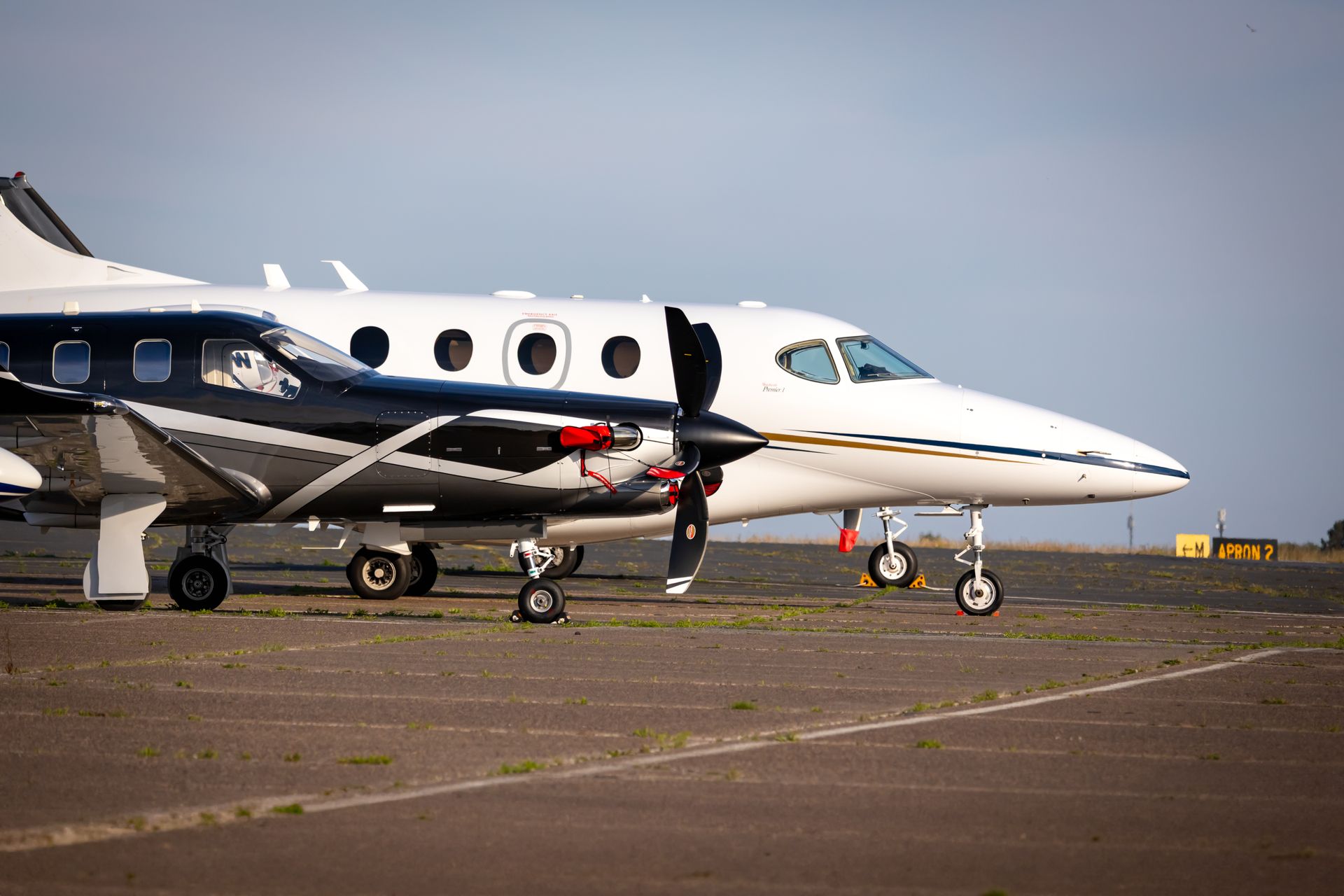
Very light jets and light jets, including aircraft like the Embraer Phenom 100 and Cessna Citation CJ series, accommodate between four and seven passengers in relatively compact cabins and are optimized for short to medium-range flights within a single geographic region. Their economics are favorable for shorter trips, their access to smaller regional airports is greater than larger aircraft, and their operating costs per flight hour are the lowest in the private jet category. For trips of under two hours between regional airports, light jets represent the most economical and often the most practical private jet option.
Midsize jets, including the Hawker 800, Citation XLS, and Learjet 60, offer meaningfully more cabin space, greater range extending to approximately four hours without refueling, and the ability to stand upright in the cabin that light jets typically cannot accommodate. This category covers the majority of domestic US and intra-European private jet travel, combining comfortable cabin dimensions with operating economics that are significantly lower than larger aircraft.
Super-midsize jets, including the Citation Sovereign, Challenger 350, and Gulfstream G280, extend the range envelope to six or more hours while delivering cabin dimensions that begin to approach those of large-cabin aircraft. This category is the sweet spot for travelers whose routes mix regional and transcontinental flying and who want a single aircraft category that handles both without the operating cost of a large-cabin jet.
Large-cabin jets, including the Gulfstream G550 and G650, Bombardier Global 6000 and 7500, and Dassault Falcon 7X and 8X, represent the pinnacle of the private jet travel market for long-range travel. These aircraft combine transcontinental and intercontinental range, in some cases exceeding 7,000 nautical miles without refueling, with cabin environments that include full flat-bed sleeping configurations, separate dining and meeting areas, and in the largest examples, dedicated bedroom and bathroom suites. The operating costs of large-cabin jets are substantial, but for travelers whose routes include transatlantic or transpacific segments, they represent the only private jet option capable of completing the journey nonstop.
The Destinations Private Jet Travel Opens
One of the most practically significant advantages of private jet travel is access to airports that commercial aviation does not serve or serves inadequately. The approximately 5,000 public-use airports in the United States that handle commercial traffic represent a fraction of the approximately 19,000 airports accessible to private aircraft. In Europe, the comparable expansion of accessible airports is similarly dramatic.
This expanded access translates directly into destination convenience. A ski vacation that would require a commercial connection through a major hub followed by a two-hour ground transfer becomes a direct flight to a small regional airport within thirty minutes of the resort. A business trip to a manufacturing facility in a secondary market that involves an overnight stay to accommodate connection timings becomes a same-day return on a direct routing. A coastal destination that commercial aviation serves only in summer on limited schedules becomes year-round accessible.
The most sophisticated users of private jet travel design their itineraries specifically around this expanded airport access, routing through smaller airports that position them closer to their actual destinations rather than defaulting to the hub airports that commercial travel requires. This approach captures one of the category’s most concrete and measurable advantages, and it is one that the comparison between commercial and private travel costs frequently understates because it does not adequately account for the value of the time and convenience that the routing difference produces.
The Cost Reality and How to Think About It
Private jet travel is expensive relative to commercial aviation by any absolute measure, and the appropriate response to that fact is honest engagement rather than either dismissal or rationalization. The cost differential is real, and it is justified, if it is justified, by a combination of time value, productivity value, comfort value, and the specific convenience advantages that the category delivers for a given traveler and a given trip.
Charter costs for a light jet on a two-hour domestic segment typically range from several thousand to over ten thousand dollars depending on the route, the aircraft, and the market conditions prevailing at the time of booking. Heavy jet transatlantic charter can run into six figures for a single trip. These are numbers that require either very high income, very high time value, group economics that divide the cost among multiple passengers, or a specific business or personal rationale that makes the differential defensible.
Group economics are worth understanding explicitly. A charter flight whose cost divided among eight passengers produces a per-person cost comparable to business class airfare on the same route, combined with all the logistical advantages of private jet travel, represents a genuinely different value proposition from the headline charter cost alone. Corporate travel departments that have run this analysis for groups traveling together to the same destination have sometimes found that private charter compares more favorably than the per-person business class cost comparison initially suggests.
Empty leg flights, aircraft repositioning flights that operators offer at significant discounts because the aircraft is flying the segment regardless of whether a paying passenger is aboard, represent one of the more accessible entry points into private jet travel for cost-conscious travelers with flexible schedules. The route and timing constraints are significant: empty legs are available where and when the operator needs them, not where and when the traveler wants them. But for travelers who can organize their plans around available empty legs, the price differential relative to standard charter can be substantial.
Sustainability and Private Jet Travel
Private jet travel carries a carbon footprint per passenger significantly higher than commercial aviation, and the growth of the category has attracted increasing scrutiny from environmental advocates and policymakers who regard the sector’s emissions as disproportionate relative to the small percentage of the population it serves. This is a legitimate critique that the private jet travel industry has engaged with to varying degrees of seriousness.
Sustainable aviation fuel, produced from waste materials and other non-fossil feedstocks, can reduce the carbon intensity of a private jet flight by up to 80 percent compared to conventional jet fuel when used in its pure form, though current production volumes limit its availability and its cost premium over conventional fuel is substantial. Some operators have committed to specific SAF blending targets and offer passengers the option of paying a premium to ensure their flight uses available SAF volumes. Carbon offset programs, while methodologically contested in their effectiveness, provide an additional mechanism for travelers seeking to address the emissions associated with their private jet travel.
The honest position for travelers who use private jet travel and care about its environmental impact is that the category’s footprint is real, that individual mitigation measures reduce but do not eliminate it, and that the development of zero-emission aviation technology capable of scaling to business jet applications represents the structural solution that the industry requires. Several manufacturers are investing in electric and hydrogen propulsion systems for shorter-range business aviation, and the timeline for these technologies reaching commercial viability continues to compress. The travelers who engage most constructively with this issue tend to be those who acknowledge the impact, take available mitigation steps seriously, and support the policy and technological development that the longer-term solution requires.
Why Private Jet Travel Remains Compelling
The case for private jet travel does not rest on luxury for its own sake, though luxury is genuinely present in the category’s upper reaches. It rests on the specific and measurable ways in which the format changes the experience of moving between places: the time recovered, the stress eliminated, the productivity enabled, the destinations accessed, and the quality of the travel experience itself for the people sharing the cabin.
Travelers who have used private jet travel consistently describe a recalibration of how they think about getting somewhere. Not a glamorization of travel for its own sake, but a recognition that the process of moving between places can be either a significant drain on time, energy, and attention or a neutral or even productive interlude, and that the choice between those outcomes is available, at a cost, to those for whom the cost is justifiable.
The terminal experience of commercial aviation, with its queues and its compression and its managed indignity, is such a reliable feature of modern life that most frequent travelers have stopped noticing how much of themselves it consumes. Private jet travel makes that consumption visible by removing it entirely, and the contrast, on the first trip and on the hundredth, remains clarifying.
That clarity, in the end, is what the category sells. The aircraft is the mechanism. What it delivers is time, on your own terms, spent the way you choose.