

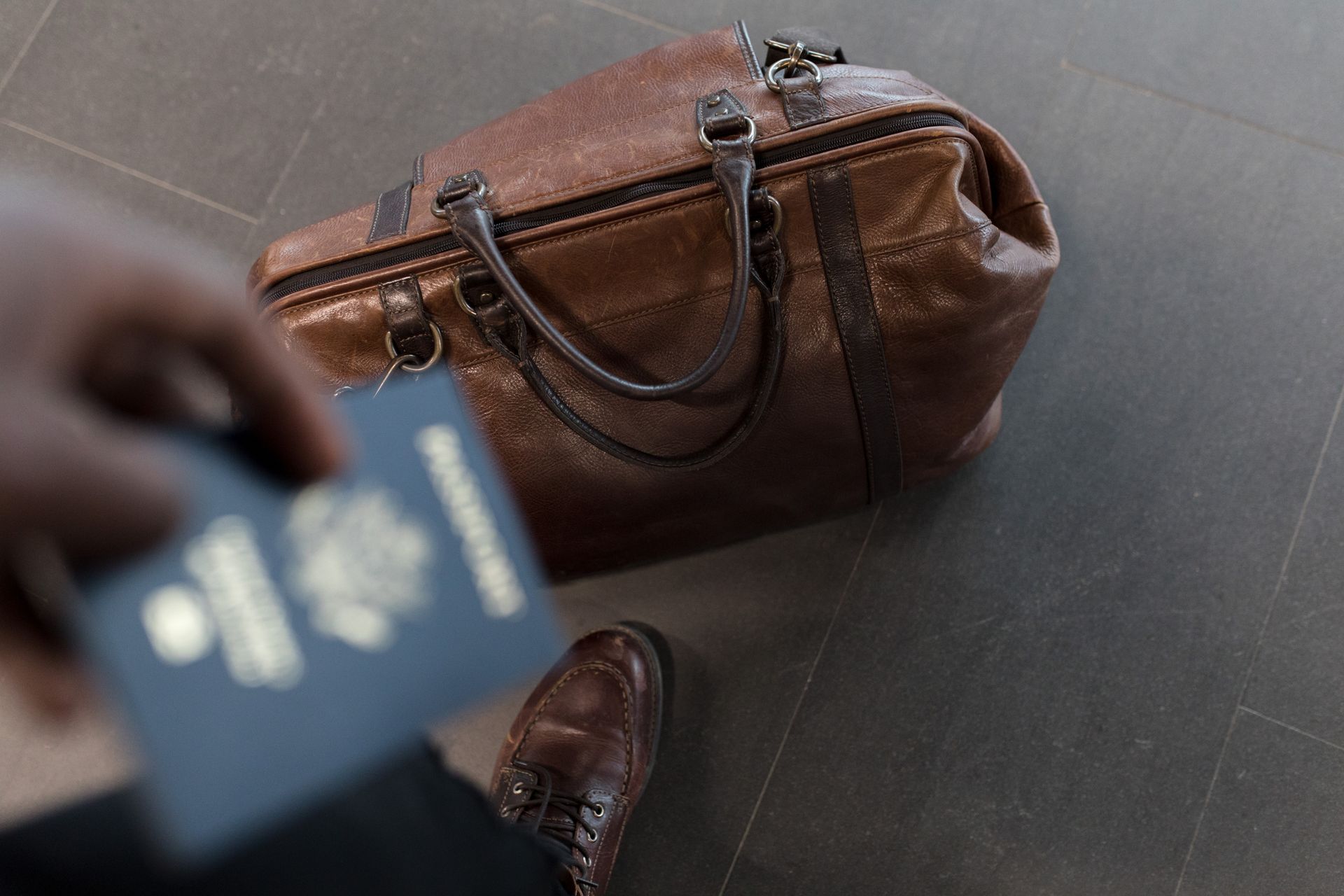

The wrong travel bag does not just create inconvenience. It quietly ruins trips. It slows you down at security, kills your shoulders on long walking days, and forces decisions at the gate that no traveller wants to be making at boarding time. Getting the right bag sorted before you go is one of the most practical things you can do for any journey, and it is considerably less complicated than the sheer volume of options on the market might suggest.
Travel bags broadly fall into a handful of categories, each designed for a different kind of traveller and a different kind of trip. Understanding what separates them, and what to actually look for within each category, makes the decision straightforward rather than overwhelming.
The Main Types of Travel Bags Explained
Rolling Suitcases
The rolling suitcase remains the most widely used travel bag for good reason. It handles the bulk of your packing without requiring you to carry the weight on your body, and the spinner wheel design that has become standard on most quality suitcases in recent years makes navigating airports, train stations, and city streets genuinely effortless when the bag is well made.
Suitcases divide into carry-on and checked sizes, and the distinction matters more than people often appreciate before their first gate conflict. For domestic flights on major carriers, the standard carry-on dimensions are 22 by 14 by 9 inches including handle and wheels. Anything larger risks being redirected to the cargo hold at the gate, particularly on full flights. If you travel frequently, a bag that reliably fits overhead without negotiation is worth paying for.
Hard-sided and soft-sided suitcases each have genuine advantages. Hard shells handle the impact of baggage handlers and overhead bin compression better, protect rigid items like electronics and bottles more reliably, and tend to look cleaner for longer. Soft-sided bags are more forgiving in tight overhead compartments, lighter overall, and easier to store at home because they compress rather than holding a fixed shape.
For checked luggage, the Travelpro Platinum Elite 29-inch has been consistently rated among the best performers by independent testers, praised for its self-aligning magnetic spinner wheels, durable nylon shell, and genuinely useful internal organisation including a fold-away garment compartment. For a hard-sided option at a more accessible price, the Away The Large delivers well-built construction and a clean aesthetic that holds up through years of regular use.
Travel Backpacks
Dedicated travel backpacks are a different category from the everyday bag you carry to work or school. Purpose-built for travel, they typically range from 35 to 40 litres, which places them at the upper limit of most airlines’ carry-on size allowances, and include features that a standard backpack does not: ergonomic harness systems designed for extended carry, weather-resistant materials, dedicated laptop and tech sleeves, and increasingly, clamshell openings that allow the bag to lie flat and be packed like a small suitcase.
That last feature, the clamshell design, has become close to essential for serious travel backpack users. Being able to see all your gear at once when packing and unpacking removes significant daily friction, particularly on multi-destination trips where you are getting in and out of your bag repeatedly. Travel backpacks are the preferred choice of one-bag travellers, digital nomads, and anyone whose itinerary involves a combination of planes, trains, buses, and walking stretches where rolling a suitcase over cobblestones or up stairs is genuinely impractical.
The Aer Travel Pack 4, updated in early 2026, is one of the most consistently recommended options across independent review platforms for its balance of organisation, carry comfort, and clean aesthetic that works equally well in business and adventure contexts.
Duffel Bags
Duffel bags occupy a useful middle ground between the structured rigidity of a suitcase and the body-worn convenience of a backpack. They are flexible enough to compress into irregular storage spaces, simple enough to pack quickly, and versatile enough to work as gym bags, weekend bags, and light travel bags within the same purchase.
For travel specifically, the most important feature to look for in a duffel is a backpack carry option. Many quality travel duffels now include padded, stowable backpack straps alongside the standard shoulder strap and carry handles. The ability to shift the bag onto your back when navigating an airport or walking a longer stretch between transport options makes a significant practical difference, particularly when the bag is fully loaded.
Duffels are not ideal for trips requiring formal clothes or anything that creases badly, since packing tends to be less structured than in a suitcase. But for adventure travel, weekend trips, and any journey where volume matters more than organisation, they deliver practical value that more structured bags cannot always match.
Personal Items and Day Bags
Beyond the main bag, most travellers need a second, smaller bag that fits under the aircraft seat and functions as an accessible companion throughout the travel day. This is the bag that holds your passport, headphones, snacks, a book, your laptop if you need it, and anything else you want within reach without opening your main luggage.
The distinction between a personal item and a carry-on matters for airline compliance, and knowing your airline’s specific size limits for the under-seat bag is worth five minutes of research before any flight. Most airlines allow a personal item of roughly 18 by 14 by 8 inches, though this varies and is enforced inconsistently.
What to Actually Look for When Buying Travel Bags
Across every category, three factors matter more than any specific brand or feature list: comfort, durability, and the right size for the trips you actually take rather than the trips you imagine taking.
On comfort, the key variable for backpacks is the harness and back panel system. A bag that lacks structure in the back panel becomes uncomfortable quickly under load, regardless of how well-organised it is. For rolling bags, handle height and wheel quality have more daily impact than almost anything else. Handles that do not extend to a comfortable rolling height, or wheels that drag rather than spin freely, create cumulative irritation across every trip.
On durability, zippers deserve more attention than most buyers give them. Chain zippers with interlocking teeth are more secure and more resistant to breakage under stress than coil zippers, which are lighter but can be pried open under pressure. Reinforced stitching at stress points, particularly where handles and shoulder straps attach, is another reliable indicator of a bag built to last across years of regular use.
On size, the most common mistake is buying bigger than necessary. A larger bag invites overpacking, which creates weight problems at check-in and physical strain on walking days. Most experienced travellers find that a 40-litre carry-on backpack or a mid-size spinner carry-on handles the majority of trips up to two weeks in length when combined with thoughtful packing. Checking luggage should be a deliberate choice for specific trip types, not a default.
The Bottom Line
The best travel bags are the ones that disappear into your trip rather than becoming a source of ongoing negotiation. That means choosing the right category for the travel you actually do, buying to the quality level that matches how often you travel, and resisting the temptation to optimise for a hypothetical trip rather than the real ones. Get those things right and your bag becomes one less thing to think about, which is exactly what it should be.