

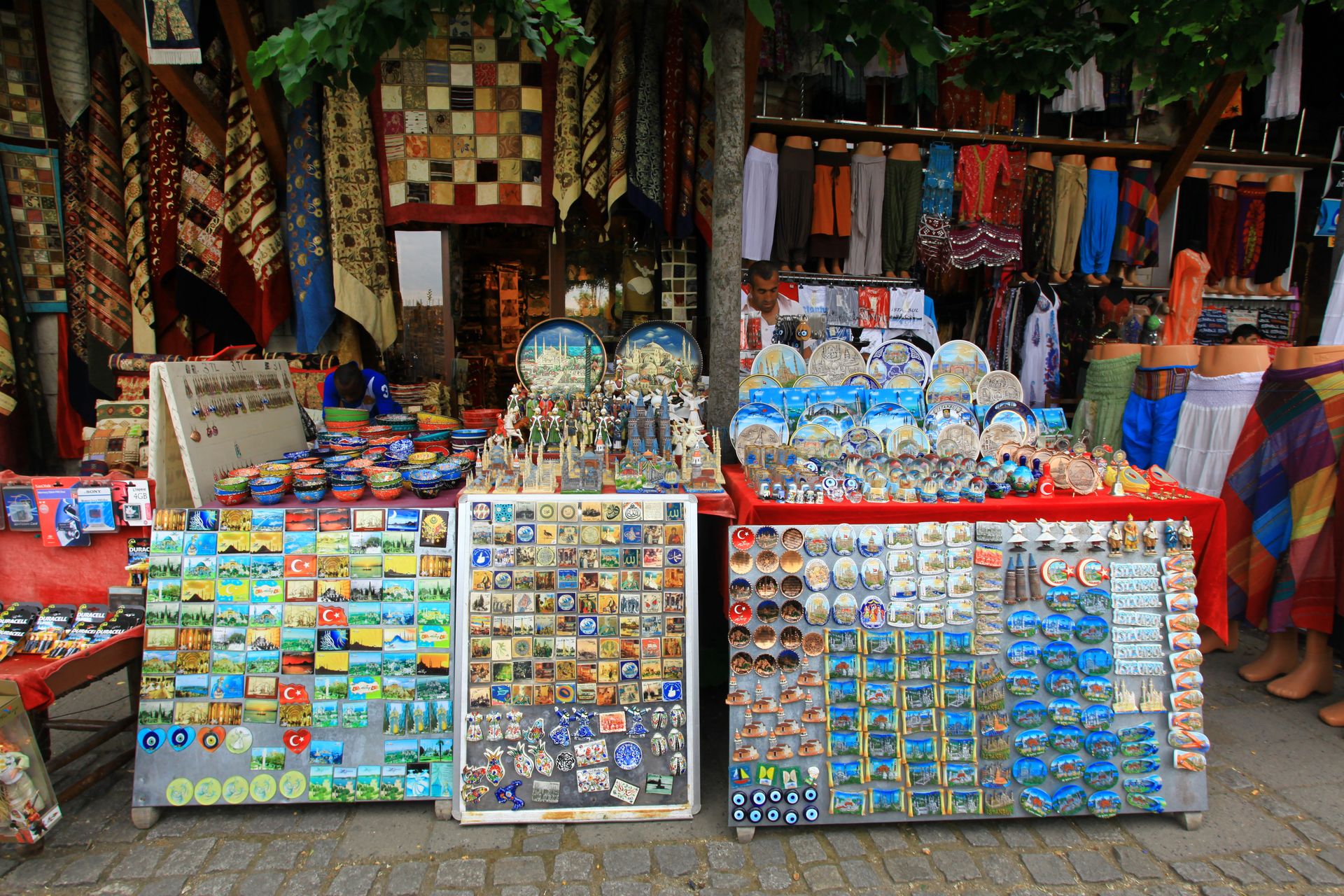

Every frequent traveler has a drawer, a shelf, or a box that contains the evidence of past decisions made in airport shops and tourist market stalls under conditions of time pressure and mild cognitive impairment from consecutive days of sightseeing. The miniature Eiffel Tower. The refrigerator magnet from a city visited eight years ago. The decorative plate that seemed to represent something meaningful at the point of purchase and now represents primarily the question of where to put it. Travel souvenirs, acquired without thought, have a way of accumulating into a collection that is difficult to display, impossible to discard, and not quite representative of the experiences that produced them.
The impulse behind souvenir buying is genuine and worth taking seriously. Bringing something home from a trip is an instinct that predates tourism by millennia: a physical object connected to a place or experience that the traveler wants to hold onto after the journey ends. The problem is not the impulse but the execution, the gap between what travel souvenirs are capable of being and what they typically are when purchased from the first available vendor within sight of a major landmark.
Getting souvenir buying right produces something genuinely different: objects with a specific gravity that grows over time, that tell a story worth telling, and that serve as real anchors for memories rather than generic placeholders for the fact of having been somewhere. The difference between the two outcomes is almost entirely a matter of intention.
Why Travel Souvenirs Matter More Than They Seem
The psychology of object-based memory is better understood than most people realize when they dismiss souvenir buying as a superficial habit. Physical objects serve as retrieval cues for autobiographical memory in ways that photographs and videos, for all their vividness, do not fully replicate. Handling an object acquired in a specific place and time activates sensory and contextual memory pathways that visual media alone does not engage as directly, which is why a piece of ceramic bought in a particular market can transport its owner back to the smell of the place and the quality of the light in a way that a photograph of the same market sometimes cannot.
This is not an argument for buying more travel souvenirs. It is an argument for buying better ones, objects that carry enough specificity of place, craft, and personal connection to function as genuine memory anchors rather than generic representations of a destination category. A machine-pressed tin plate depicting a famous landmark is a placeholder. A hand-thrown pot bought from the potter who made it, in a workshop you found by walking away from the obvious tourist district, is a story.
The distinction matters because what you bring home from a trip shapes how you remember the trip. Travel souvenirs that are specific, craft-made, and connected to genuine encounters with the people and places of a destination reinforce the most meaningful aspects of travel memory. Generic ones occupy space without adding meaning.
What Makes a Travel Souvenir Worth Buying
The most useful filter for evaluating any potential travel souvenir purchase is a simple question: does this object exist only here, or could I buy something nearly identical in a tourist shop in my home city? The answer eliminates the majority of what tourist markets offer immediately, and the remainder is worth examining more carefully.
Genuine craft and local production are the most reliable markers of a souvenir worth buying. An object made by hand, using materials and techniques specific to the region where it was produced, carries a locality that mass-produced tourist merchandise structurally cannot replicate, regardless of how faithfully it depicts the destination’s iconic imagery. The woven textile produced on a loom by a cooperative of artisans in a specific Andean village is a different object from a woven textile depicting the same patterns produced in a factory and sold at the airport departure gate, even if they look superficially similar in a photograph. The difference is in the object’s connection to the place and the people it comes from.
Personal connection at the point of purchase adds a dimension to travel souvenirs that changes their character significantly. Buying directly from the maker, understanding something about the process and the tradition the object represents, and having a brief conversation that makes the transaction a human encounter rather than a commercial one produces objects with a specific weight of memory attached. The basket maker whose name you remember, the silversmith who explained the symbolism of a particular design, the textile weaver who showed you how a specific pattern is created: these encounters become part of the object itself in a way that anonymized retail purchases do not.
Scale and practicality matter more than most travelers acknowledge in the moment of purchase and rather more acutely when repacking for the return journey. Beautiful but fragile objects, objects of considerable size or weight, and objects whose function in the home is genuinely unclear at the point of purchase all represent risks that experienced souvenir buyers have learned to assess honestly before committing. The best travel souvenirs tend to be objects that are either small enough to pack easily and display anywhere or genuinely useful in daily life, integrating themselves into the traveler’s home environment in a way that keeps the memory active rather than consigning the object to a shelf that is rarely interacted with.
The Travel Souvenirs Worth Seeking by Category
Food and drink represent the most universally successful souvenir category for travelers who prioritize experience over permanence. A bottle of wine from a vineyard visited during a trip, a jar of local honey from a market stall, a tin of spice blend specific to a regional cuisine, or a package of coffee beans from a farm whose process you observed: these are travel souvenirs that integrate immediately into daily life, that produce a sensory recall of the trip each time they are used, and that prompt the sharing of travel stories in the context of a meal or a drink rather than in front of a shelf of objects that guests are invited to admire.
The limitation of food and drink travel souvenirs is their impermanence, which for many travelers is not a limitation at all but a feature. The bottle is opened, the meal is eaten, and the memory it activates is more vivid for having been triggered by taste and smell rather than visual recognition alone. Customs regulations across different countries apply to food imports and require some research, particularly for products containing meat, dairy, or fresh produce, but dry goods, sealed commercial products, and alcohol within the allowed quantity limits travel without significant complication across most routes.
Textiles and wearable craft represent the category with the most consistent track record among experienced souvenir buyers. A scarf, a piece of jewelry, a hat, or a pair of sandals made by craftspeople using traditional techniques is a travel souvenir that earns its keep by being worn and used rather than displayed. Moroccan leather goods from the Fes medina tanneries, hand-woven scarves from the textile cooperatives of the Guatemalan highlands, silver jewelry from the workshops of Oaxaca or Taxco, silk from the markets of Hội An or the weavers of Suzhou: these are categories where the intersection of genuine craft, regional specificity, and daily usability produces travel souvenirs of lasting value.
Books, maps, and printed material specific to a destination occupy an underappreciated souvenir category. A well-made book about the history or art of a destination, purchased from a local bookshop rather than an airport gift store, a beautifully printed map of a city from a cartographic print seller, or a collection of locally produced poetry in bilingual edition: these are travel souvenirs that reward repeated engagement rather than passive display, and their connection to the specificity of a place is often more profound than any object produced for the tourist market.
Ceramics and glassware, when chosen carefully and packed with appropriate protection, represent some of the most enduring travel souvenir categories. The ceramic traditions of specific regions carry visual and technical vocabularies that are genuinely local: the blue and white azulejo tilework of Portugal, the terracotta of Tuscany, the hand-painted pottery of Oaxaca, the celadon glazes of Korean ceramics. A piece chosen for its craft quality rather than its landmark imagery carries the aesthetic tradition of a place into daily life in a way that outlasts the memory of the trip itself.
Art, in the broadest sense, represents the highest-investment souvenir category and the one with the most potential for genuine lasting significance. A print by a local artist purchased directly from a gallery or studio, a small painting from an outdoor market where the artist was working, a photograph by a local photographer whose work captured something essential about the place: these are travel souvenirs that function as art in the home while carrying the additional meaning of provenance and personal encounter. The investment required is real, and the research to distinguish genuine local artistic production from tourist-market reproductions is necessary, but the objects that result from that investment tend to become the anchors of a home’s visual environment rather than the contents of a drawer.
Where to Find Travel Souvenirs Worth Buying
The first rule of finding travel souvenirs worth buying is to leave the immediate vicinity of the major tourist attractions before looking. The economic logic of tourist market positioning means that the highest density of generic, imported, and mass-produced merchandise concentrates around the sites that attract the most visitors, precisely because the foot traffic justifies even the lowest conversion rate. Moving two or three streets away from the primary tourist zone, into the neighborhoods where the locals shop and the market stalls serve the community rather than the visitor, consistently reveals a more authentic and more interesting range of objects.
Craft markets specifically organized around local artisan production, as distinct from general tourist markets that mix genuine craft with imported merchandise, are the most reliable environment for finding travel souvenirs of genuine provenance. Many countries and cities support craft certification programs or artisan market designations that identify markets where the production standards and local origin of goods are verified. Researching these specifically before travel, rather than approaching souvenir buying opportunistically on the day, produces better results.
Museum shops at major cultural institutions have improved considerably in quality over the past decade and now represent a legitimate source of travel souvenirs with genuine connection to local cultural heritage. The best museum shops stock reproduction prints, craft objects produced by artisan partners, and publications of genuine quality that would be difficult to find in general tourist retail. They are not cheap, but they are reliable in terms of provenance and quality in a way that tourist market stalls are not.
Direct purchase from makers, at workshops, studios, cooperatives, and production facilities open to visitors, produces the most personally connected travel souvenirs available and is worth organizing specifically as a travel activity rather than leaving to chance. Many craft traditions around the world, from the pottery villages of Japan to the weaving cooperatives of the Andes to the woodworking workshops of Morocco, welcome visitors and provide an experience of watching the object being made that adds a dimension of understanding and connection to the purchase that no retail environment can provide.
Customs, Regulations, and What Not to Bring Home
The legal and ethical dimensions of travel souvenir acquisition are worth understanding explicitly, because the categories where problems arise most frequently are also the categories where the objects are most appealing to buyers unfamiliar with the relevant regulations.
Antiquities and archaeological artifacts are subject to strict export controls in virtually every country with significant cultural heritage, and the purchase of genuine antique objects, as opposed to legal reproductions, from informal market vendors in countries including Egypt, Turkey, Peru, Cambodia, and many others carries a risk of confiscation and legal consequences that no object’s appeal justifies. The rule for any object presented as genuinely ancient is to assume that its legal export status is uncertain and to purchase only from established dealers who can provide documentation of legal provenance and export authorization.
Wildlife products are regulated by international agreements including the Convention on International Trade in Endangered Species, and the range of products affected is broader than most travelers realize. Ivory, tortoiseshell, coral, certain feathers, and products made from species listed under CITES protection are subject to import restrictions in most developed countries regardless of whether they were legally purchased in the country of origin. Customs enforcement of these restrictions has increased, and the consequences of inadvertent violation include confiscation, fines, and in serious cases criminal prosecution.
Plants, seeds, and soil are subject to biosecurity regulations in many countries, particularly Australia, New Zealand, and the United States, that are enforced seriously to prevent the introduction of invasive species and agricultural pathogens. Declaring all plant material on arrival and accepting inspection or confiscation where required is not optional, and the consequences of non-declaration are significant.
The Souvenir You Cannot Pack
The most enduring travel souvenir is not an object at all. It is the change in perspective that a good trip produces, the expansion of reference that comes from having seen how other people organize their lives, built their cities, prepared their food, and made sense of the world. This is not a useful souvenir in the conventional sense, it cannot be displayed or given as a gift, but it is the one that lasts longest and matters most.
The physical objects acquired during travel matter most when they serve as connective tissue between the traveler who went and the person who returned: specific enough to carry real memory, beautiful or useful enough to earn a place in daily life, and connected enough to the genuine encounter with a place to represent something more than the fact of having been there.
That is a high standard for a refrigerator magnet. It is not, as it turns out, a particularly high standard for the kind of travel that produces objects worth keeping. The trips that generate the best stories tend also to generate the best souvenirs, because both come from the same source: genuine attention to the places and people encountered along the way.