
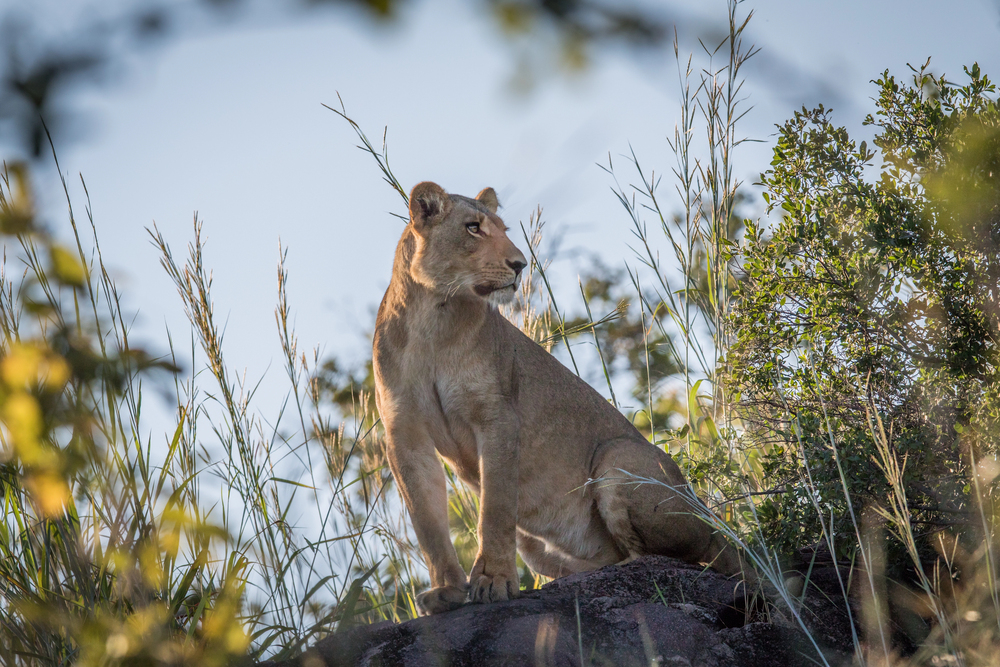

The animals are real. Everything else depends entirely on the decisions you make before you leave.
There is a moment on a first safari that no amount of preparation quite readies you for. The vehicle stops. The guide cuts the engine. Fifty meters away, a leopard is lying along a branch with the complete indifference of an animal that has never needed to be afraid of anything, and the only sound is the wind moving through the acacia and the involuntary intake of breath from everyone in the vehicle. No photograph will capture it accurately. No description will reproduce it. It is one of those experiences that recalibrates something quietly and permanently.
That moment is available to anyone who books a safari. What varies enormously is everything surrounding it: the quality of the guiding, the health of the ecosystem, the number of other vehicles crowding the same sighting, the ethics of the operation, and whether the trip as a whole feels like genuine immersion in one of the planet’s last great wilderness areas or like a theme park with better scenery.
The difference between those two outcomes is almost entirely a function of decisions made before departure. This is a guide to making them well.
Understanding What Safari Actually Means
The word gets applied to an enormous range of experiences, from three-night budget camping trips in heavily trafficked reserves to month-long private concession expeditions covering multiple countries and ecosystems. They share the broad outline of a vehicle, a guide, and wild animals, and almost nothing else.
The variables that matter most are the reserve or concession, the guiding standard, the accommodation format, and the time of year. Each of these interacts with the others in ways that compound. A mediocre guide in an exceptional reserve will consistently underperform a brilliant guide in a moderately good one. The best accommodation in the wrong season will produce fewer sightings than a tent in the right place at the right time. Understanding these relationships is the foundation of planning a safari that delivers rather than merely ticks a box.
East Africa: The Familiar Choice and Why It Still Leads
The Serengeti and Masai Mara remain the default answers to the question of where to go on safari, and their dominance is not without justification. The East African savanna ecosystem, stretching across northern Tanzania and southwestern Kenya, supports wildlife populations of a scale and density that genuinely has no equivalent anywhere else on earth.
The Great Migration, the annual movement of roughly 1.5 million wildebeest and several hundred thousand zebra and gazelle in a circuit between the Serengeti’s southern plains and the Masai Mara, is the largest terrestrial wildlife movement on the planet. The river crossings, when the herds attempt to ford the crocodile-filled Mara River in chaotic, thundering masses, are among the most viscerally dramatic wildlife events available to any traveler. Timing matters precisely: the crossings happen most reliably between July and October in the Mara, and between January and March on the southern Serengeti plains during calving season.
Beyond the migration, the Serengeti supports resident populations of lion, leopard, cheetah, elephant, buffalo, and giraffe year-round, and the Ngorongoro Crater, a collapsed volcanic caldera an hour’s drive from the main Serengeti ecosystem, concentrates wildlife in a natural amphitheater that produces sightings of remarkable density and quality.
The honest caveat is that the most accessible parts of both reserves can feel crowded during peak season. The solution is straightforward: book private conservancies and concessions adjacent to the main reserves rather than the reserves themselves. The Laikipia Plateau in Kenya, the private conservancies bordering the Masai Mara’s northern boundary, and the southern and western Serengeti all offer equivalent wildlife quality with a fraction of the vehicle density.
Botswana: The Case for Spending More
Botswana occupies a particular position in the safari world. It is, by design, an expensive destination, built around a government policy that has deliberately limited visitor numbers in favor of high-cost, low-impact tourism. The result is some of the least crowded and most pristine wilderness areas in Africa, and a safari experience that feels categorically different from the busier East African reserves.
The Okavango Delta is the centerpiece: a vast inland river delta in the middle of the Kalahari Desert, where water from the Angolan highlands spreads across the arid landscape each year to create a seasonal wetland of extraordinary richness. The combination of water and land creates a diversity of habitats and therefore a diversity of wildlife that rewards extended exploration. Mokoro trips through the papyrus channels, walking safaris in the dry areas, and boat excursions through open waterways cover ecosystems that no single game drive can access.
The Moremi Game Reserve within the delta and the Chobe National Park to the northeast, home to Africa’s largest elephant population, together give Botswana a wildlife portfolio of genuine breadth. Chobe in particular, particularly along the riverfront during the dry season when animals concentrate around the water, offers elephant sightings of a scale that can be difficult to comprehend until you are standing in the middle of a herd of several hundred.
Botswana rewards travelers willing to invest properly. It does not function as a budget destination, and attempting to approach it as one produces a compromised version of something that is exceptional when engaged with on its own terms.
Southern Africa’s Hidden Argument: Zambia and Zimbabwe
The reputations of Zambia and Zimbabwe as safari destinations lag significantly behind their actual quality, which creates an opportunity for travelers willing to look past the more marketed options.
Zambia’s South Luangwa National Park is, among serious safari guides and wildlife professionals, frequently cited as one of the finest parks in Africa. The walking safari was largely developed here, by Norman Carr in the 1950s, and the tradition of exploring the bush on foot with an experienced armed guide remains central to the South Luangwa experience in a way it has been diluted elsewhere. Walking through an ecosystem rather than observing it from a vehicle changes the relationship with the environment completely. The scale of perception shifts. Insects, tracks, smells, and sounds that a vehicle renders invisible become part of the experience.
Zimbabwe’s Hwange National Park supports one of Africa’s largest elephant populations and a predator density that rewards patience. Mana Pools, on the Zambezi River, offers canoe safaris and walking experiences of remarkable wildness. The infrastructure is less developed than Botswana or Kenya, which keeps prices more accessible and visitors thinner on the ground.
Victoria Falls sits on the border of both countries and provides a natural pairing with a safari itinerary: the falls are genuinely one of the most powerful natural spectacles on earth, and combining them with several nights in South Luangwa or Hwange creates a trip of considerable range and depth.
Beyond Africa: The Overlooked Safari World
Safari thinking, broadly defined as traveling specifically to observe wildlife in natural habitats, extends well beyond the African continent, and several destinations outside Africa deliver experiences that deserve to be part of the conversation.
India’s tiger reserves, particularly Ranthambore in Rajasthan and Kanha and Bandhavgarh in Madhya Pradesh, offer Bengal tiger sightings in a landscape of dry teak forests and ancient ruins that is unlike anything in Africa. The Indian safari experience is different in character: the forests are denser, the sightings more dramatic for their rarity, and the cultural context, Mughal architecture, temple towns, village life visible from the jeep, layered in ways that an African reserve is not. Tiger sightings are never guaranteed, but the reserves that have invested seriously in protection and anti-poaching efforts have seen populations recover enough that patience is increasingly rewarded.
The Pantanal in Brazil, the largest tropical wetland in the world, offers the highest jaguar density of any ecosystem on earth and a general abundance of wildlife, giant otters, capybaras, caimans, hyacinth macaws, tapirs, that approaches the Serengeti in sheer volume if not in the same dramatic open-savanna format. It remains genuinely undervisited relative to its quality, partly because Brazil’s better-known nature destination, the Amazon, draws attention away from it.
The Guide Question
No single factor determines the quality of a safari more than the person driving the vehicle and reading the bush. A great guide transforms an outing into an education: they know not just where the animals are but why they are there, what the behavior you are watching means, what happened before you arrived and what is likely to happen next. They read tracks and calls and the behavior of oxpeckers on a buffalo’s back and the direction a herd of impala is staring. They make the ecosystem legible.
The questions worth asking an operator before booking are specific: how long has your lead guide been working in this reserve? What qualifications do they hold? Will I have the same guide throughout the trip? Continuity of guiding matters. A guide who has spent years in one ecosystem knows it in a way that a rotation system cannot replicate.
The best operators are proud of their guides and will speak about them in specific terms. Vague answers to guiding questions are a meaningful warning sign.
Timing, Ethics, and the Long View
The ethical dimension of safari tourism has become more central to booking decisions as awareness of conservation funding models has grown. The most direct way to ensure a safari contributes positively to the ecosystems it visits is to choose operators with transparent community benefit programs and genuine anti-poaching investment, and to avoid operations in reserves where vehicle numbers at sightings are uncontrolled.
Community conservancies, where local populations receive direct economic benefit from wildlife tourism, have produced some of the most remarkable conservation results in Africa over the past two decades. Namibia’s communal conservancy model has brought species back from serious decline. Kenya’s private conservancy system surrounding the Masai Mara has expanded the effective wildlife range considerably while providing income that makes coexistence with wildlife economically rational for the communities involved.
Choosing operations that function within these models is not just ethically sound. It tends to produce better wildlife experiences, because ecosystems with genuine community investment in their survival are healthier, larger, and less compromised than those that exist in tension with the people around them.
The Calculation That Makes It Worth Making
A well-planned safari is among the most significant travel investments most people will make, in time, cost, and logistical complexity. It is also, for the right traveler, among the most enduring.
The leopard on the branch doesn’t negotiate with the quality of your planning. But the likelihood of being there to see it, in a healthy reserve, in a vehicle with a guide who knew exactly where to go and why, with no other vehicles crowding the moment, depends entirely on the decisions made long before the engine was cut and the silence descended.
Those decisions are worth making carefully. The wilderness they lead to has been worth protecting for a reason.