

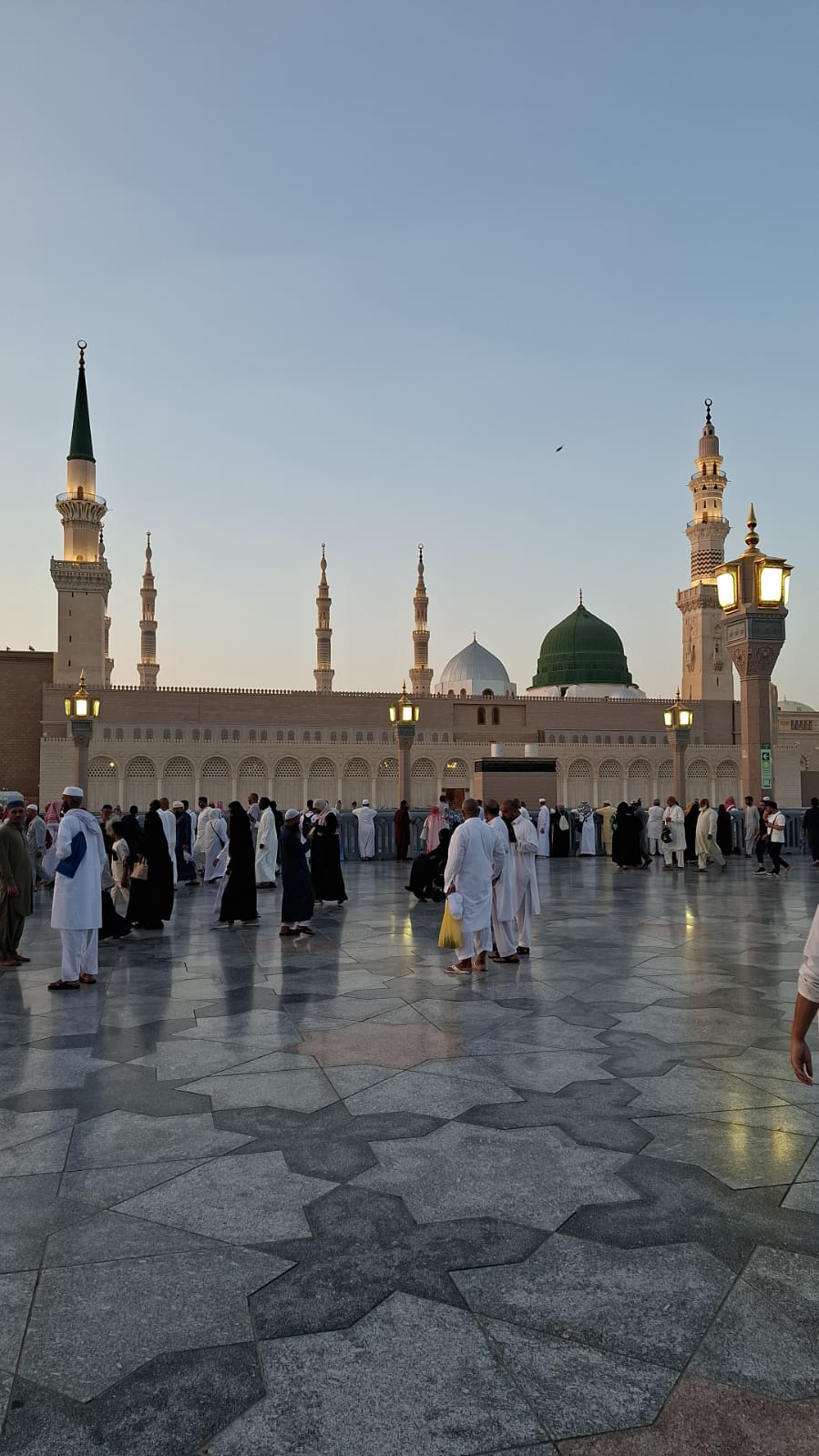

There are some journeys that begin with a ticket, a suitcase, and a carefully planned itinerary. Then there are journeys that begin much earlier in the heart, in a whispered dua, and in the quiet longing of a believer who dreams of standing in Madina Sharif, near the blessed resting place of the Holy Prophet Muhammad (SAW).
For me, a blessed visit to the Holy Prophet Muhammad (SAW) Mosque in Madina Sharif is not simply travel. It is a spiritual arrival. It is the moment when the world becomes quieter, the heart becomes softer, and the soul feels that it has reached one of the most beloved places on earth.
Known widely as Al-Masjid an-Nabawi, the Prophet’s Mosque in Madina is among Islam’s holiest sites and one of the most deeply loved destinations for Muslims across the world.
Located in the radiant city of Madina in Saudi Arabia, the mosque welcomes millions of worshippers, pilgrims, families, scholars, and seekers every year. For many of us, it is a lifetime dream fulfilled. For others, it is a return to a place that continues to call the heart back again and again.
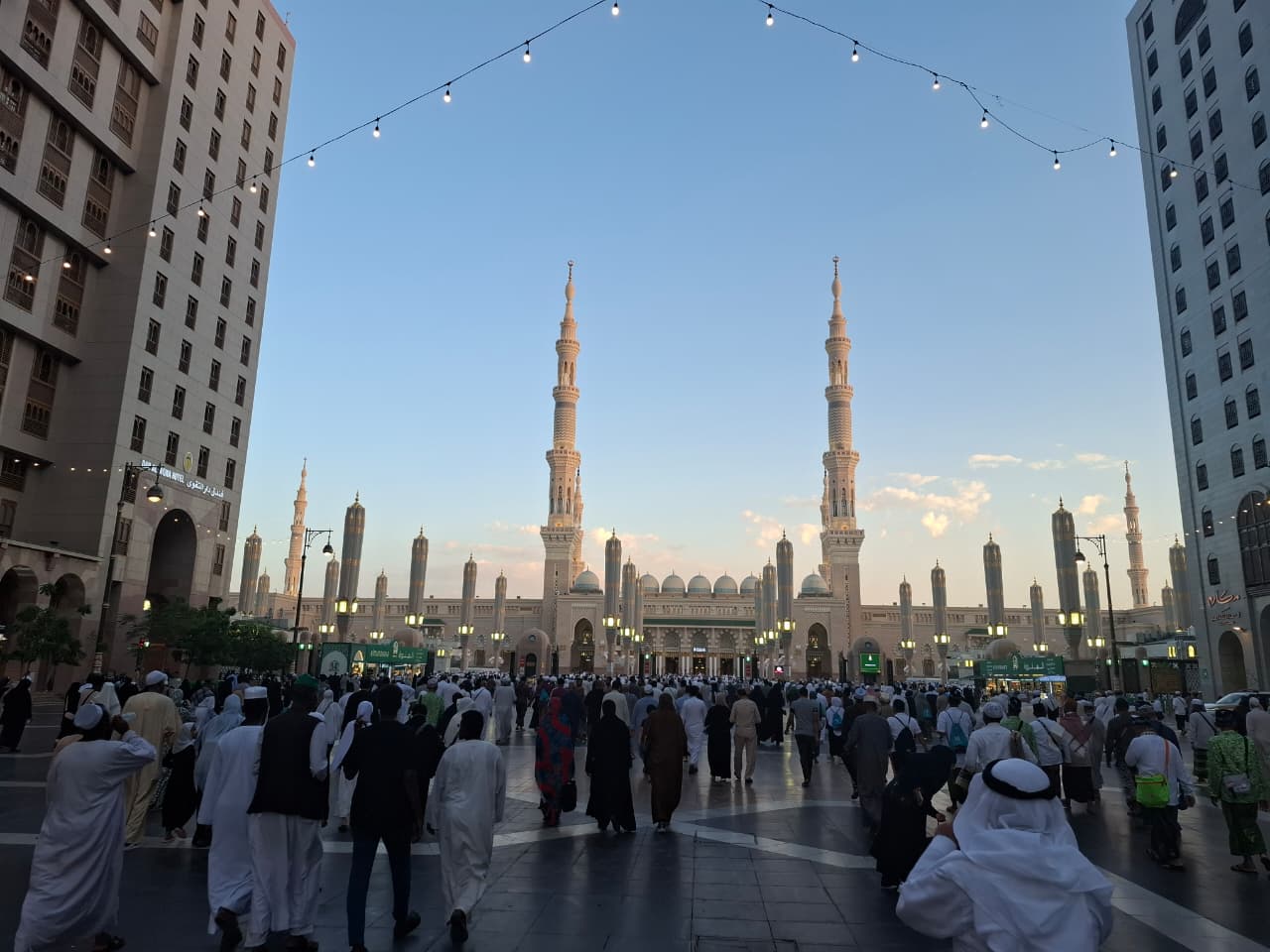
In the language of luxury travel, some destinations are admired for their beauty, exclusivity, architecture, or heritage. But Madina Sharif goes beyond ordinary descriptions. Its luxury is not extravagance; it is peace. Its grandeur is not only in marble courtyards, soaring minarets, and graceful umbrellas, but in the serenity that descends upon the heart the moment one enters its sacred surroundings.
My First Glimpse of Masjid an-Nabawi
The first glimpse of the Prophet’s (SAW) Mosque is something I believe every visitor carries forever. The white marble courtyard gleams under the Arabian sun. The minarets rise with calm dignity into the sky. The famous Green Dome, deeply associated in the hearts of Muslims with the blessed resting place of the Holy Prophet Muhammad (SAW), becomes a sight that words struggle to hold.
There is a special silence around that first view. Even among thousands of people, I felt alone with Allah, humbled by the privilege of being present. The eyes naturally become moist. The lips begin sending durood and salaam. The heart pauses, not out of confusion, but out of recognition.
Madina has a gentleness unlike any other city. While Makkah carries the awe and majesty of the Kaaba, Madina carries a softness, a mercy, and a calm that feels healing. It is a city of love — love for Allah, love for the Messenger of Allah (SAW), and love for the brotherhood and sisterhood of the Ummah.
The Prophet’s Mosque is also a place of remarkable organization. Today, visitors can use official digital services for pilgrimage-related planning, including the Nusuk platform, which operates under the supervision of Saudi Arabia’s Ministry of Hajj and Umrah and provides services connected to Umrah planning, accommodation, transportation, and heritage visits.
Entering With Humility and Respect
I believe a visit to Masjid an-Nabawi should begin with adab (respect) — spiritual manners, humility, cleanliness, and reverence. This is not a place to rush through as if it were a tourist attraction. It is a place to enter with presence.
Before entering the mosque, I try to remind myself of the importance of modest dress, cleanliness, a lowered voice, and respect for everyone around me. In such a sacred place, even small actions matter. One should avoid anything that disturbs other worshippers, whether it is pushing through crowds, speaking loudly, taking careless photographs, or treating the mosque like an ordinary landmark.
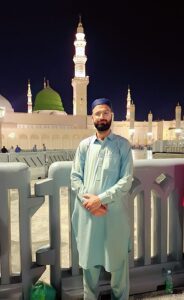
Every step can become worship when taken with the right intention. I enter with the intention of praying in the mosque of the Prophet (SAW), sending salutations upon him, remembering Allah, and seeking spiritual renewal.
Inside the mosque, the atmosphere is deeply moving. Rows of worshippers from every nation stand shoulder to shoulder. Languages differ, clothing differs, cultures differ — but the direction, devotion, and love are one. It is one of the most powerful living portraits of the Muslim Ummah.
The Spiritual Beauty of Prayer in Madina Sharif
Prayer in Masjid an-Nabawi is among the most treasured experiences of Muslim travel. The stillness before salah, the call to prayer echoing across the courtyards, and the sight of thousands gathering in disciplined rows create a memory that remains long after one returns home.
For me, Fajr in Madina has a special beauty. The air feels cool, the lights glow softly, and the city seems wrapped in mercy. At Maghrib, the sky changes color above the minarets. At Isha, the mosque appears luminous, peaceful, and majestic. Each prayer has its own feeling, but all carry the same invitation: leave behind the noise of the world and return to Allah.
For anyone arriving from the speed and pressure of modern life, this may be the greatest gift of Madina. The city teaches slowness. It teaches presence. It reminds us that the heart also needs a home.
Visiting Al-Rawdah Al-Sharifah
Among the most spiritually significant areas of the Prophet’s Mosque is Al-Rawdah Al-Sharifah, a blessed area inside Masjid an-Nabawi. Access to Al-Rawdah is managed through an official permit system, so visitors should plan ahead, follow official instructions, arrive at the designated time, and remain patient with staff and fellow worshippers.
Related Video:
For me, the thought of praying in Al-Rawdah carries immense emotional weight. It is one of those moments a believer prepares for with humility, hope, and deep love. Yet I also remind myself that the value of the experience is not measured by how long one remains in a particular place, but by the sincerity carried in the heart.
Even a short prayer offered with full presence can become a lifelong memory.
Sending Salaam Upon the Holy Prophet Muhammad (SAW)
One of the most tender moments of a visit to Madina Sharif is sending salaam upon the Holy Prophet Muhammad (SAW). For a believer, this is a moment filled with love, gratitude, and humility. It reminds me of the Prophet’s mercy, his sacrifices, his guidance, and the light of Islam that reached generation after generation.
This moment should be approached calmly and respectfully. I believe visitors should avoid pushing, raising their voices, taking excessive photos in sensitive areas, or disturbing others. The best approach is dignified, soft, and full of inward devotion.
A blessed visit is not about display. It is about connection. It is about standing with a heart full of love and saying, with humility, peace and blessings be upon you, O Messenger of Allah.
The Courtyards, Umbrellas, and Architecture of Peace
Even from an architectural perspective, Masjid an-Nabawi is extraordinary. Its vast courtyards, polished marble floors, majestic minarets, and iconic shade umbrellas create an environment that is both functional and beautiful. The mosque accommodates immense numbers of worshippers while still preserving a feeling of sacred calm.
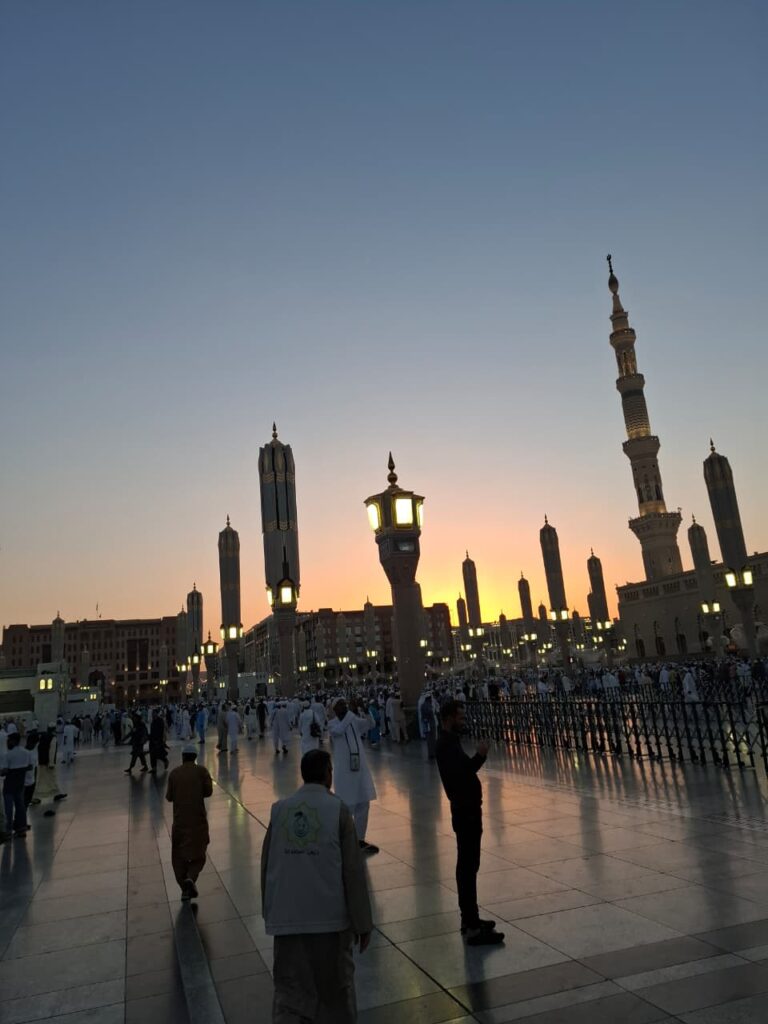
The umbrellas of the mosque are among its most recognizable modern features. During the day, they provide shade and visual harmony across the courtyards. At night, the open spaces glow under soft lighting, creating one of the most peaceful urban religious landscapes in the world.
For a luxury travel audience, Madina offers something rare: a place where design serves devotion. The beauty of the built environment does not distract from worship; it supports it. Everything appears to guide the visitor toward reflection.
Madina Beyond the Mosque
Although Masjid an-Nabawi is the heart of the journey, Madina Sharif offers other meaningful places connected to Islamic history. Visitors often explore sites such as Quba Mosque, Mount Uhud, Masjid Qiblatain, and other landmarks associated with the early Muslim community.
For me, visiting these places deepens the understanding of sacrifice, patience, brotherhood, and faith. Madina is not only a city of memory; it is a city of lessons.
However, I believe one should balance sightseeing with worship. The most valuable itinerary in Madina is not necessarily the busiest one, but the most meaningful one. Time in the mosque, quiet recitation of the Qur’an, sincere dua, and reflection should remain at the center of the journey.
Practical Tips From a Personal Perspective
A journey to Madina Sharif becomes smoother when planned with care. I recommend keeping documents, hotel details, prayer schedules, and digital permits organized. Those planning Umrah or related visits should use official channels and avoid relying on unverified agents or unofficial promises.
For Al-Rawdah access, visitors should check official appointment requirements in advance through the relevant Saudi platforms. Since the system is designed to organize visits and protect the comfort and safety of worshippers, patience and punctuality are essential.
Comfortable footwear is important, especially because the mosque complex and nearby hotel areas may involve considerable walking. A small prayer mat, a reusable water bottle where permitted, and a lightweight bag can also be useful. Visitors should be mindful of the heat, especially during warmer months, and should plan outdoor movement accordingly.
Most importantly, I believe one should prepare spiritually before arriving. Read about the seerah of the Prophet Muhammad (SAW). Increase durood. Make a list of duas. Seek forgiveness. Mend relationships where possible. A visit to Madina is not only about reaching a place; it is about becoming worthy of what the place awakens inside you.
The Emotional Return From Madina
Leaving Madina is often harder than arriving. The final prayer, the last look at the Green Dome, the final walk through the courtyard, and the last salaam are moments that stay quietly alive in the heart for years.
But the true blessing of Madina is not only what one feels there. It is what one carries home.
A blessed visit should make me softer, kinder, more patient, more truthful, and more devoted to Allah. It should strengthen my love for the Sunnah. It should inspire better character. It should remind me that the most beautiful souvenir from Madina is not something bought in a market, but a heart changed by love and humility.
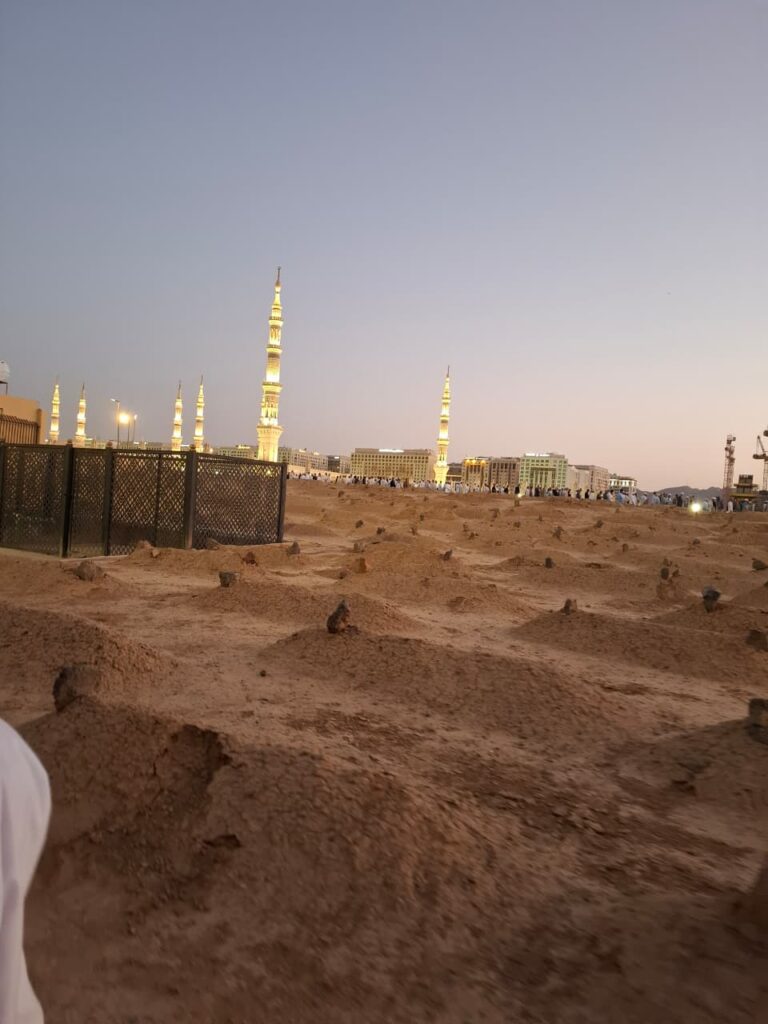
For Impact Luxury Travel readers, Madina Sharif represents the highest form of meaningful travel. It is sacred, elegant, historic, and transformative. It is a destination where the traveler does not simply observe beauty — the traveler is invited to become more beautiful within.
A blessed visit to the Holy Prophet Muhammad (SAW) Mosque in Madina Sharif is a journey of love. It is a journey of peace. And for those blessed enough to experience it, it is a journey that never truly ends.
FAQs
Why is the Holy Prophet Muhammad (SAW) Mosque in Madina Sharif so important?
The Holy Prophet Muhammad (SAW) Mosque, also known as Masjid an-Nabawi, is one of the most sacred places in Islam. It is deeply loved by Muslims because of its connection to the life, mission, and blessed resting place of the Prophet Muhammad (SAW).
Do visitors need a permit for Al-Rawdah Al-Sharifah?
Yes, access to Al-Rawdah Al-Sharifah is organized through an official online permit system. Visitors should check the latest official Saudi platforms before planning their visit.
What is the best time to visit Masjid an-Nabawi?
Many visitors find Fajr, Maghrib, and Isha especially peaceful and spiritually moving. However, the best time depends on personal schedule, crowd levels, weather, and prayer arrangements.
How should visitors behave inside the Prophet’s Mosque?
Visitors should maintain humility, modest dress, cleanliness, quiet voices, patience, and respect for worshippers. The mosque should be approached as a sacred place of prayer, not as an ordinary tourist attraction.
What should I prepare before visiting Madina Sharif?
I recommend preparing both practically and spiritually. Keep travel documents and permits organized, pack comfortable footwear, learn about the seerah of the Prophet Muhammad (SAW), increase durood, and make a list of sincere duas before arrival.