
The sober bar arrived quietly. It has since become something the drinks industry is paying close attention to.
There is a moment that anyone who doesn’t drink, whether permanently, temporarily, or simply on a given evening, knows well. The group settles into a bar, menus arrive, and the options resolve into sparkling water, soft drinks that feel adolescent in the context of an adult night out, and a mocktail list that reads like an afterthought because it usually is, a few combinations of fruit juice and soda given cocktail names and cocktail prices without any of the complexity or craft that justifies either. The experience communicates, not unkindly but clearly, that this space was not really designed with you in mind.
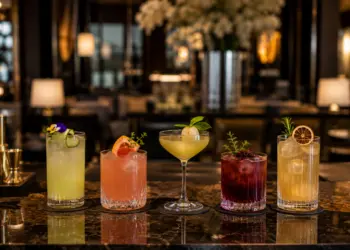
The non-alcoholic bar is a direct response to that experience, and what’s interesting about it is not just that it exists as a concept but that the execution, in the places doing it well, has moved well beyond simply removing alcohol from a drinks list. The best non-alcoholic bars have developed a genuine drinks culture around their product, one that draws on the same principles of flavor complexity, ingredient sourcing, technique, and presentation that define serious cocktail culture, applied to a medium that doesn’t happen to contain ethanol.
The growth of this category reflects several converging forces. The rise of the sober curious movement, the expansion of the no and low alcohol beverage market, a broader shift in how younger demographics in particular relate to drinking, and significant investment in non-alcoholic spirits and wines that are genuinely complex rather than simply alcohol-free have all contributed to creating both the demand and the supply conditions for non-alcoholic bars to exist as something more than a niche wellness curiosity.
What a Non-Alcoholic Bar Actually Is
The term covers a range of formats that are worth distinguishing, because the experience varies considerably between them.
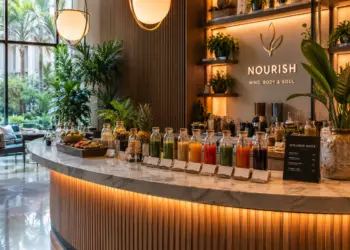
The purist model is a bar that serves no alcohol at all, where the entire menu is built around non-alcoholic drinks and the drinks program is the primary identity of the venue. These are the establishments that have attracted the most attention and that represent the most direct challenge to the assumption that a bar, by definition, is a place organized around alcohol. They tend to be small, focused operations with menus that change seasonally, bartenders who describe their work in the same terms a sommelier would use about wine, and a pricing structure that reflects the craft involved rather than the ingredient cost of juice and soda.
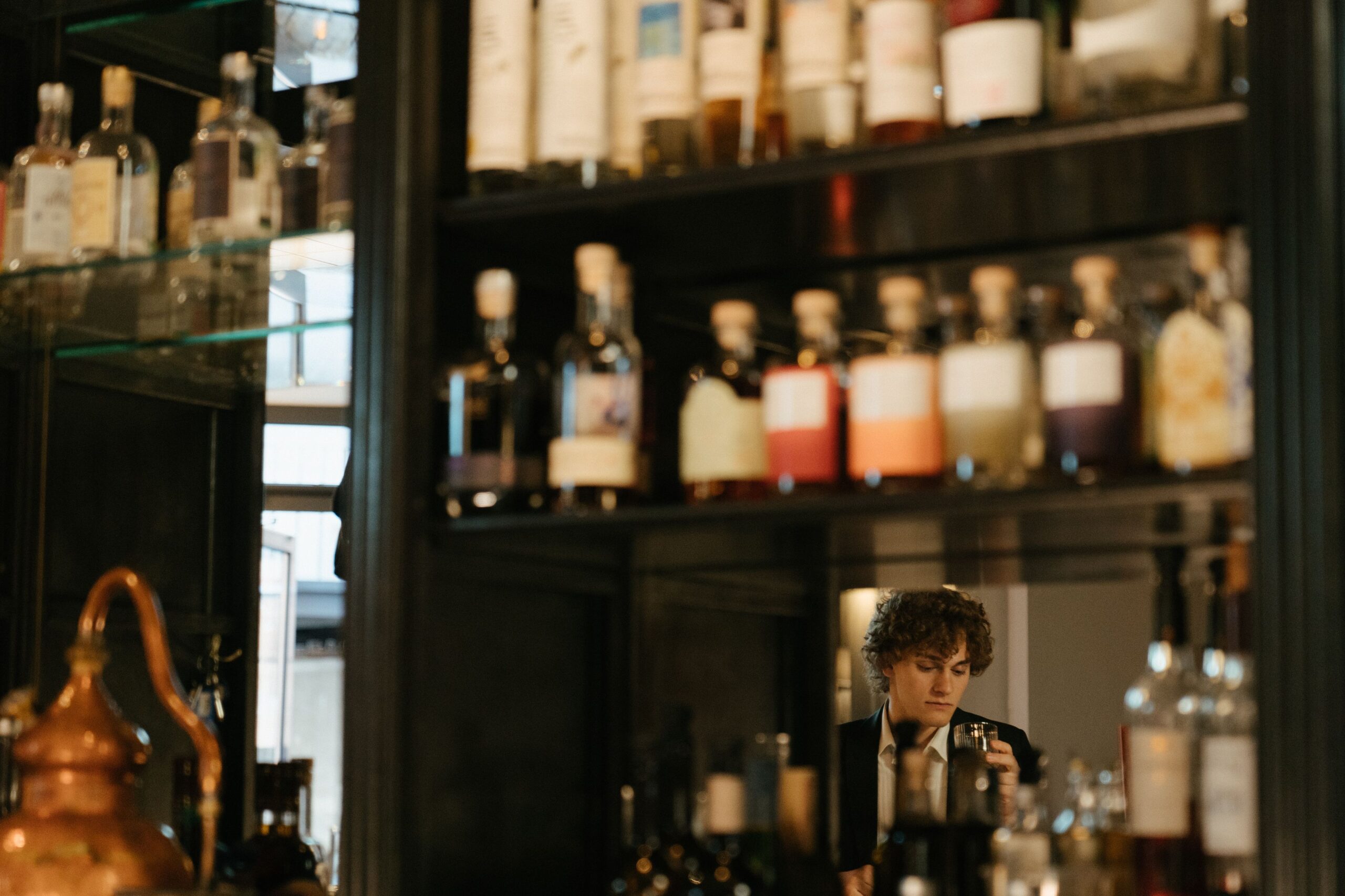
A broader category includes venues that serve both alcoholic and non-alcoholic drinks but have invested in the non-alcoholic program to a degree that makes it genuinely equal rather than supplementary. These are perhaps more significant in terms of changing what the average night out looks like for non-drinkers, because they exist within the mainstream hospitality landscape rather than requiring a deliberate choice to go somewhere specifically designed for sobriety. Walking into a bar and finding a non-alcoholic menu of genuine quality and equivalent range to the cocktail list represents a different kind of progress than the existence of dedicated sober bars, because it doesn’t require the non-drinker to organize the evening around their own abstinence.
Pop-up non-alcoholic bars, which have proliferated particularly in January when Dry January creates a concentrated period of demand, occupy an interesting position in the landscape: they introduce the concept to people who might not seek out a permanent sober bar but who encounter one in the context of an existing venue or event space during a period when they happen to be not drinking. Several of these pop-ups have subsequently become permanent fixtures, suggesting that the demand they encountered was not purely seasonal.
The Drinks Themselves
The sophistication of non-alcoholic drinks has advanced more quickly than most people who haven’t been paying close attention to the category would expect, and understanding why requires understanding what alcohol actually contributes to a drink beyond its intoxicating effect.
Alcohol is a solvent that carries and delivers flavor compounds in ways that water cannot fully replicate. It provides body, a sense of warmth, and a finish that lingers in ways that non-alcoholic liquids typically don’t. It preserves and balances. A cocktail built around a spirit is balanced in part because the alcohol itself provides structural weight that other ingredients play against. Removing the alcohol doesn’t just change the effect of the drink; it changes the fundamental chemistry of how the flavors interact.
The most interesting work in non-alcoholic drinks has been in addressing this challenge specifically rather than simply replacing spirits with juice. Non-alcoholic spirits like Seedlip, the category’s most prominent pioneer, and a growing range of competitors including Lyre’s, Monday, Ritual, and Bax Botanics use distillation, maceration, and blending of botanicals to create products with genuine complexity, bitter notes, herbal depth, and the structural weight that alcohol would otherwise provide. Some use adaptogens, functional mushrooms, or other ingredients with their own physiological effects to replace what alcohol contributes to the drinking experience beyond flavor. Others focus purely on flavor complexity without seeking to replicate alcohol’s physical effects at all.
Non-alcoholic wine has followed a parallel trajectory, moving from the thin, grape-juice-adjacent products of a decade ago toward genuinely complex fermented and dealcoholized wines that retain meaningful character from the grape variety, the terroir, and the winemaking process. Dealcoholization technology has improved to the point where the best non-alcoholic wines lose less of their flavor complexity in the alcohol removal process than earlier methods allowed, and the category now includes wines from serious producers who are applying the same viticultural attention to their non-alcoholic output as to their conventional wines.
Non-alcoholic beer has arguably progressed furthest and fastest, partly because the brewing process for low and no alcohol beer has been developed over a longer period and partly because the mass market for non-alcoholic beer, driven by drivers, athletes, and casual non-drinkers rather than specifically by sober curious culture, has sustained the investment needed to improve quality substantially. Craft non-alcoholic beer from breweries that take the category seriously now exists in styles that were previously unavailable without alcohol, including IPAs, stouts, and sours with flavor profiles that stand up to comparison with their alcoholic equivalents in ways that would have seemed implausible ten years ago.
The Venues That Have Defined the Category
A relatively small number of venues have established themselves as reference points for what a non-alcoholic bar can be at its most developed, and they are worth knowing about both for their own sake and for what they demonstrate about the category’s possibilities.
Redemption in London, which opened in 2013 and therefore predates much of the current cultural conversation around sober drinking, built its early identity around the intersection of sobriety and health, positioning non-alcoholic drinks within a broader wellness context. Its longevity in a hospitality landscape where concepts come and go quickly is itself a data point about the category’s sustainability.
Getaway in New York opened specifically as a non-alcoholic bar and has operated as one of the most visible reference points for what the American sober bar looks like, with a menu built around non-alcoholic spirits and a physical space that functions as a conventional bar in every respect except the content of the glasses. Its existence in a city with the density and diversity of New York’s hospitality scene, where it has maintained relevance rather than functioning as a curiosity, is meaningful.
Sèchey in Washington DC approaches the category from a retail and bar hybrid model, combining a shop selling non-alcoholic wines, spirits, and beers with a bar where those products can be consumed, creating a space where discovery and drinking coexist in a way that more purely hospitality-focused venues don’t replicate.
Beyond dedicated venues, the integration of serious non-alcoholic programs into conventional cocktail bars has arguably been the most significant development, normalizing the category for a much larger audience. Bars with cocktail programs of genuine reputation that have invested equally in their non-alcoholic offering signal to the broader hospitality industry that the non-drinking guest deserves the same quality of experience as the drinking one, and that providing it is neither commercially risky nor creatively limiting.
Who Is Actually Going to These Places
The audience for non-alcoholic bars is more diverse than the wellness-focused framing that initially surrounded the concept implied, and understanding this diversity is important for understanding why the category has grown beyond a specific demographic moment.
Permanently sober people, including those in recovery, have an obvious relationship to venues where the social experience of a bar exists without alcohol, and they represent a constituency that has historically been underserved by mainstream hospitality. But the growth of non-alcoholic bars has been driven at least as much by a broader population that drinks but chooses not to on specific occasions or during specific periods: pregnant women, people on medication, designated drivers, people observing Dry January or similar voluntary periods of abstinence, athletes managing performance, and the general population of people who simply don’t want to drink tonight without wanting to be treated as either unwell or unusual for that preference.
The sober curious demographic, people who are questioning their relationship with alcohol without having committed to permanent sobriety, represents the most commercially significant new entrant to this audience. This group, substantial in size and increasingly visible in the cultural conversation around drinking, wants the social context of a bar, the quality of a carefully made drink, and the option to engage with drinking culture on their own terms rather than simply abstaining from it. Non-alcoholic bars offer exactly that: a space where the craft, the atmosphere, and the sociality of going out for drinks is available without the alcohol that is no longer, for this group, a given part of the experience.
The Business Case and Where the Category Is Heading
Non-alcoholic bars face a specific commercial challenge that their alcoholic counterparts don’t: the ingredient cost of a well-made non-alcoholic drink using quality non-alcoholic spirits is often similar to that of an alcoholic cocktail, but the perceived value of the product to the consumer, shaped by decades of pricing expectations around juice and soda, is lower. Communicating why a non-alcoholic cocktail costs twelve dollars rather than five is a genuine marketing task, and the venues that do it most effectively are those that make the craft of the drink visible rather than assuming the customer will intuit it.
The pricing question resolves more naturally in venues where the non-alcoholic program exists alongside an alcoholic one, because the comparison point is the cocktail list rather than the soft drink menu, and the cultural context of paying cocktail prices for a cocktail translates reasonably well even when the cocktail happens not to contain alcohol.
The trajectory of the category is toward normalization rather than continued novelty, which is the most significant thing that can be said about where it’s heading. The non-alcoholic bar is most interesting not as a statement about sobriety or wellness but as a development in hospitality that takes seriously the experience of everyone in the room, not just the people who are drinking. When that becomes standard enough to stop being noteworthy, the category will have achieved what its best proponents set out to do.