

Something has shifted in how a growing number of people think about time off. The holiday that once meant lying on a beach with a drink and a novel still exists and still has its place, but it is increasingly sharing the market with a different kind of travel intention: one organized not around relaxation as passivity but around restoration as active pursuit. People are returning from trips not just rested but changed, in ways that a week at a resort rarely produces. Holistic wellness retreats are at the center of that shift, and the growth of the sector over the past decade reflects something real about what a significant number of travelers are now looking for from the time and money they invest in getting away.
The category is broader than the term sometimes suggests, and understanding what holistic wellness retreats actually encompass, what they deliver, what they cost, and how to choose among them, is the starting point for anyone considering making one part of their travel life.
What Holistic Wellness Retreats Actually Mean
The word holistic is used loosely enough in wellness marketing that it has lost some of its precision, but its original meaning remains the most useful definition for travel purposes. A holistic approach addresses the whole person: physical health, mental and emotional state, and in many traditions, spiritual wellbeing, treating these not as separate categories to be managed independently but as dimensions of a single interconnected system. A holistic wellness retreat, at its most coherent, designs its program around that interconnection rather than offering a collection of unrelated treatments and activities under a wellness umbrella.
In practice, holistic wellness retreats range from highly structured programs with scheduled daily activities, personalized health assessments, and clinical supervision to loosely organized environments that provide the setting, the practitioners, and the space for guests to design their own experience. Between those poles sits the majority of the market: retreats with a clear philosophical or methodological orientation, a daily rhythm that balances guided sessions with personal time, and a practitioner team whose expertise covers the range of modalities the program offers.
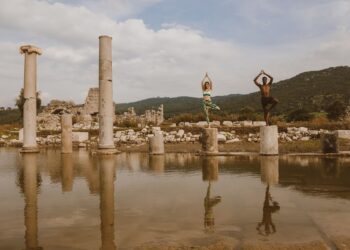
The modalities themselves vary considerably by tradition and geography. Yoga and meditation form the foundation of the majority of holistic wellness retreats operating in the Western market, but the depth and sophistication with which these practices are taught differs enormously between a resort that offers a morning yoga class as an amenity and a retreat that has structured its entire program around a serious engagement with contemplative practice. Ayurveda, the traditional Indian system of medicine and lifestyle, anchors a significant segment of the market, particularly in South and Southeast Asia, offering personalized treatment protocols based on individual constitutional assessment. Traditional Chinese medicine, breathwork, somatic therapy, nutritional medicine, and various forms of psychotherapeutic practice all appear within the holistic wellness retreat landscape, sometimes in combination.
The Destinations Defining the Global Wellness Retreat Market
Geography shapes the holistic wellness retreat experience in ways that go beyond scenery. The traditions that inform a retreat’s methodology are often most authentically practiced in the cultural contexts that produced them, and the natural environment of a destination contributes to the quality of the experience in ways that are difficult to replicate artificially.
India remains the foundational destination for holistic wellness retreats drawing on Ayurvedic and yogic traditions. Kerala in the south, with its network of established Ayurvedic treatment centers and the particular quality of its tropical landscape, has the deepest institutional infrastructure for serious Ayurvedic programs. Rishikesh in the north, situated in the foothills of the Himalayas at the confluence of sacred rivers, has served as a center of yogic learning for generations and continues to attract practitioners and students seeking genuine depth of engagement with the tradition. Both destinations have developed sophisticated hospitality infrastructure alongside their wellness credentials, making them accessible to travelers who want serious practice without sacrificing basic comfort.
Bali has established itself as one of the world’s most recognized holistic wellness retreat destinations, combining a genuine local spiritual culture with a hospitality industry that has invested heavily in wellness programming over the past two decades. The island’s Hindu traditions, its landscape of rice terraces and volcanic mountains, and a local practitioner community with real depth in healing arts create conditions that support the kind of holistic wellness retreat experience that visitors return to repeatedly. Ubud, in the island’s interior, functions as the center of this ecosystem, with a concentration of retreat properties, independent practitioners, and wellness-focused restaurants and markets that make the entire environment feel oriented toward the category.
Thailand’s wellness retreat market has developed significant sophistication, particularly in Chiang Mai in the north and across the resort islands of the south. The country’s tradition of Thai massage, combined with strong Buddhist contemplative practices and a food culture that naturally supports nutritional wellness programming, gives Thai holistic wellness retreats a distinctive character. Properties like Kamalaya on Koh Samui have set international standards for the integration of clinical wellness expertise with exceptional hospitality and natural setting.
In Europe, the wellness retreat market has grown rapidly across Portugal, Spain, the UK, and the Alpine regions of Switzerland and Austria. Portugal’s Alentejo and Algarve regions have attracted significant investment in retreat properties that combine the country’s exceptional natural environment with programming drawn from both traditional and contemporary wellness modalities. The Swiss Alps have long hosted destination spa properties whose combination of mountain environment, clinical expertise, and exceptional accommodation represents the upper end of what the European market delivers. These properties, including some of the continent’s most established health resort names, offer medically supervised programs of a rigor and sophistication that lifestyle retreats rarely match.
Costa Rica has emerged as a leading destination for holistic wellness retreats in the Americas, combining extraordinary biodiversity, a stable and peaceful cultural environment, and a growing community of wellness practitioners with genuine expertise. The country’s combination of Pacific and Caribbean coastlines, cloud forest interiors, and volcanic landscapes provides a natural backdrop that supports the kind of environmental immersion that amplifies wellness programming in ways that urban or resort settings cannot replicate.
What a Well-Designed Program Actually Looks Like
The difference between a holistic wellness retreat that produces lasting change and one that delivers a pleasant week of healthy living is almost entirely a function of program design and practitioner quality. Both can be enjoyable. Only one tends to be genuinely transformative.
A well-designed holistic wellness retreat begins with assessment. Understanding where a guest is arriving from, physically, mentally, and emotionally, before designing their program is the foundational step that separates a genuinely personalized retreat experience from a standardized group program with individual names attached. The assessment might take the form of an Ayurvedic constitutional analysis, a functional medicine intake, a somatic evaluation with a body-oriented therapist, or a straightforward conversation with a senior practitioner who is experienced enough to understand what a guest actually needs rather than what they initially request.
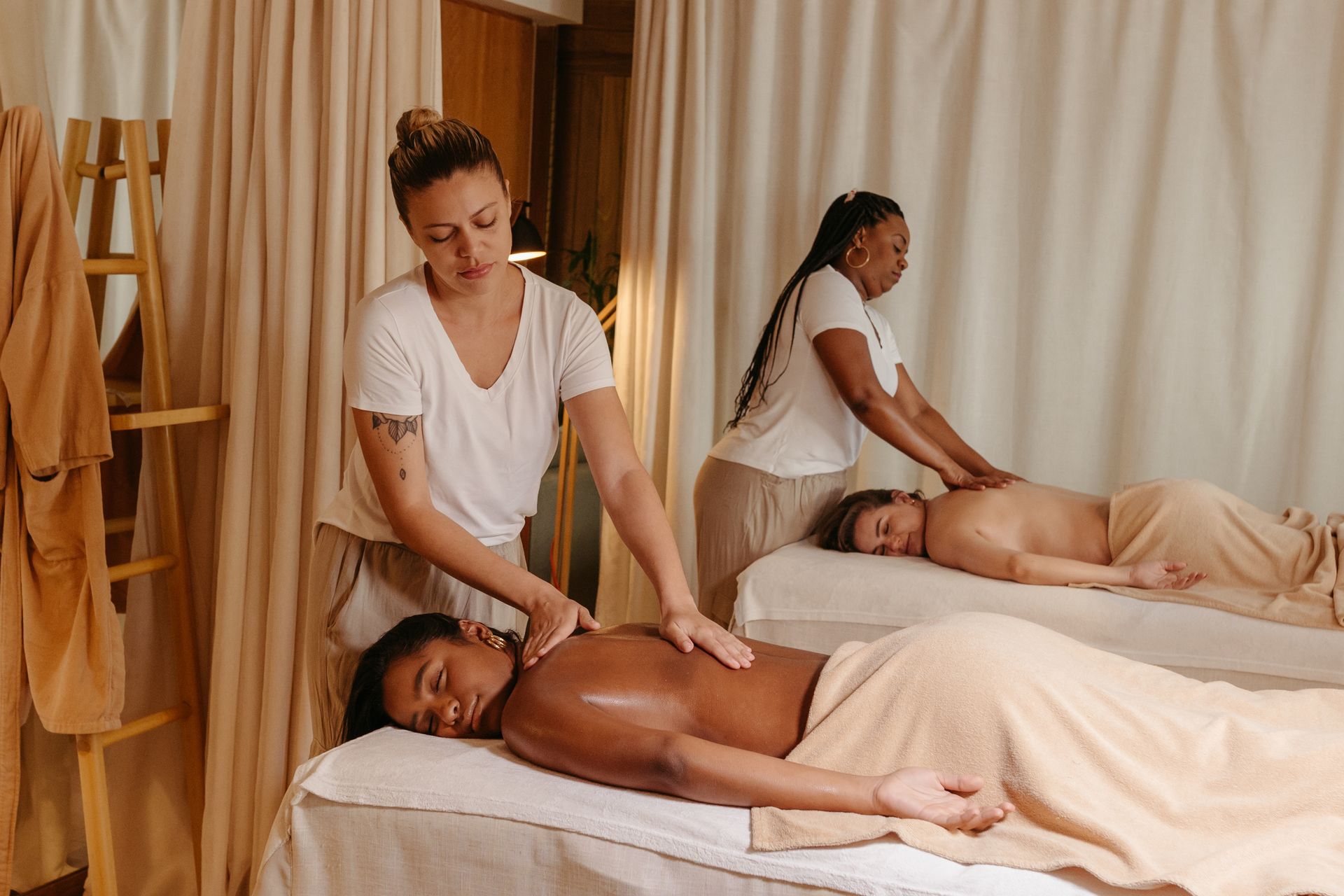
The daily rhythm of a serious holistic wellness retreat tends to follow a pattern that balances physical practice, contemplative practice, treatment sessions, nutritional support, and sufficient unstructured time for integration. Morning practices, typically movement or breathwork, set the physiological tone for the day. Treatment sessions, whether bodywork, energy work, or therapeutic conversation, are scheduled at intervals that allow genuine absorption rather than stacking experiences so densely that none of them land. Meals are designed as part of the therapeutic program rather than as a separate hospitality function, with nutritional content chosen to support the specific goals of the retreat’s methodology.
Evening programming in the best holistic wellness retreats tends toward the contemplative: guided meditation, restorative yoga, journaling practice, or simply the kind of early sleep that most guests have not managed in months. The absence of evening entertainment, screens, and the social obligations that structure ordinary social life is not a deprivation in this context. It is part of the design, creating conditions for the nervous system to do work that it cannot do while stimulated.
The Science Behind Why Holistic Wellness Retreats Work
The mechanisms through which holistic wellness retreats produce measurable effects on health and wellbeing are increasingly well-supported by research, even as the specific claims of individual modalities vary considerably in their evidentiary basis.
The most consistent finding across studies of retreat and immersive wellness experiences is the effect on the stress response system. Removing a person from the chronic low-level stressors of their ordinary environment, providing structured sleep, reducing inflammatory dietary inputs, introducing regular movement and breathwork, and creating conditions for genuine rest produces measurable reductions in cortisol levels, improvements in sleep architecture, and improvements in self-reported wellbeing that persist beyond the retreat itself when the experience is of sufficient duration and quality.
Meditation practice, which features in the majority of holistic wellness retreats in some form, has one of the more robust bodies of supporting research within the wellness space. Regular practice has been associated with structural changes in brain regions involved in attention regulation, emotional processing, and stress response, with effects that accumulate over time rather than dissipating after a single experience. A retreat that introduces a genuine meditation practice and provides the conditions and instruction for it to take hold can produce benefits that extend years beyond the stay itself.
Nutritional interventions, when designed with genuine expertise rather than fashionable dietary ideology, address inflammatory processes that underlie a wide range of chronic health conditions. Many guests at holistic wellness retreats report significant improvements in digestive function, energy levels, sleep quality, and mood within the first several days of a well-designed nutritional program, which provides immediate reinforcement for the lifestyle changes the retreat is encouraging.
Choosing the Right Holistic Wellness Retreat
The wellness retreat market contains properties of extraordinary quality and properties that deploy wellness language fluently while delivering something considerably more modest. The gap between them is not always obvious from a website or a brochure, which means that deliberate research before booking is not optional.
Practitioner credentials are the most reliable indicator of a retreat’s genuine depth. Yoga teachers with years of dedicated study and teaching experience, Ayurvedic practitioners with formal clinical training, therapists with recognized qualifications in their specific modality: these are the people who make the difference between a program that sounds impressive and one that actually delivers. Most serious retreat properties are transparent about their team’s backgrounds and training. Those that are not warrant appropriate skepticism.
Program specificity matters more than aesthetic appeal. A retreat that can articulate clearly what its program is designed to achieve, what the daily structure looks like, how individual needs are assessed and accommodated, and what guests typically experience during and after their stay is a retreat that understands what it is doing. Vague promises of transformation accompanied by beautiful photography of infinity pools and sunrise yoga are a reliable signal that the hospitality is more developed than the program.
Duration is a practical constraint that significantly affects outcomes. Most practitioners in the holistic wellness retreat space suggest a minimum of five to seven days for a program to produce meaningful effects, with ten to fourteen days representing a more substantial intervention for guests with specific health goals. Weekend retreats have genuine value as introductions to practice or as maintenance for experienced practitioners, but they rarely provide sufficient time for the deeper recalibration that the category at its best can produce.
What Comes After
The most common observation among guests who have completed a serious holistic wellness retreat is that the experience creates a before and after in their relationship with their own health and daily life. The practices introduced during the retreat, the quality of sleep achieved under its conditions, the dietary changes that produced noticeable effects, and the contemplative tools that provided access to a different quality of mental state: these become reference points that reorganize priorities in ways that persist long after the return home.
Not every holistic wellness retreat produces this outcome. The ones that do tend to share a common set of characteristics: genuine practitioner expertise, a program with coherent philosophical foundations, a natural environment that supports immersion, and a duration sufficient for real change to begin. Finding the intersection of those qualities requires research, but the investment in that research is, for most guests who make it, among the most consequential travel decisions they ever make.
The world has no shortage of beautiful places to rest. Holistic wellness retreats offer something rarer: a beautiful place to change.