

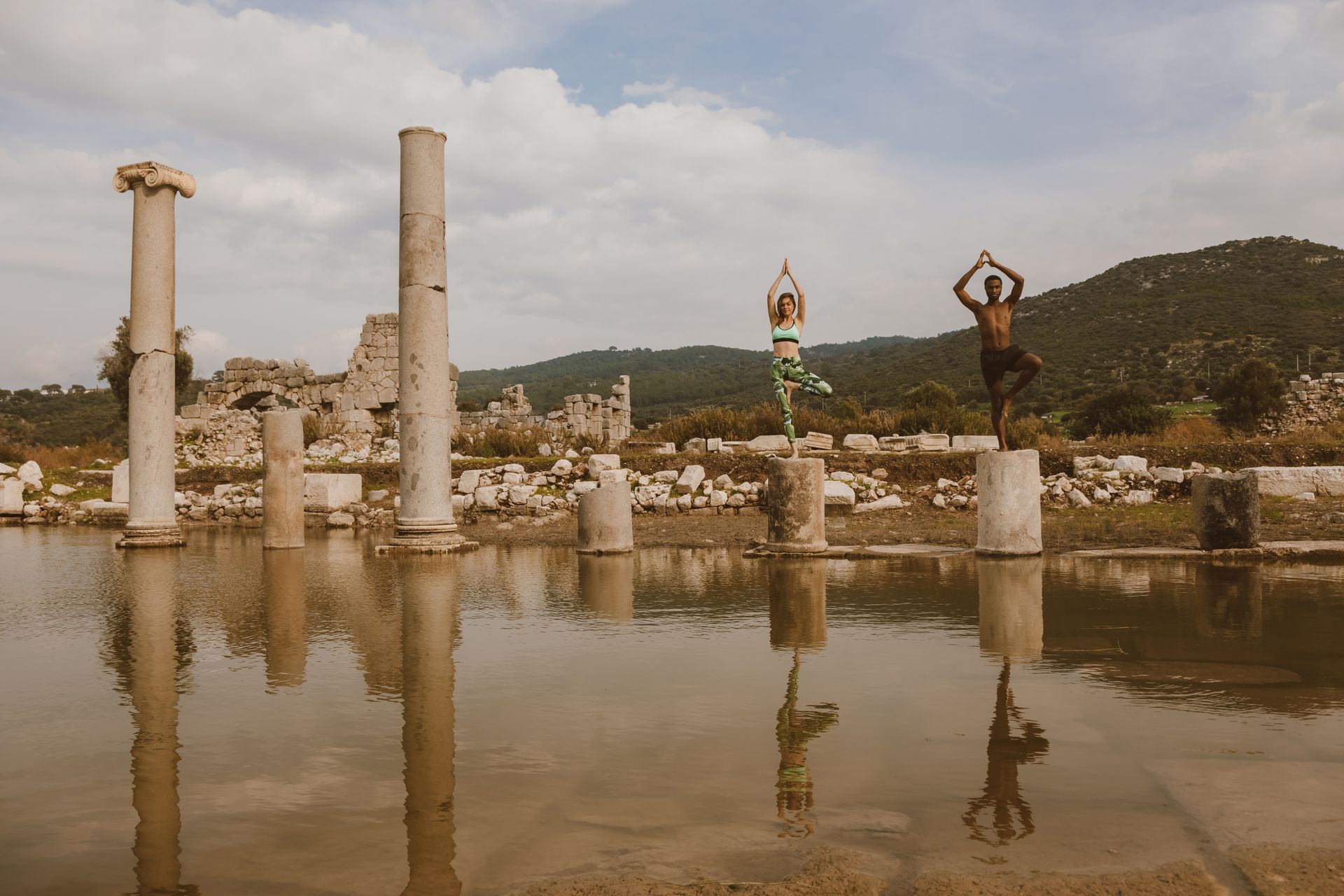

A vacation used to mean rest in the loosest possible sense: a beach chair, a pina colada, a week of doing as little as humanly possible. For a rapidly growing number of travellers, that definition no longer holds. Rest has become measurable. Recovery has become a metric. And the trip itself has become something closer to an intervention than an escape.
Wellness tourism, travel undertaken specifically to maintain or improve physical, mental, or emotional wellbeing, has grown into one of the largest and fastest-expanding categories in global travel. Market estimates vary depending on methodology, but the scale is consistent across every major research firm tracking the sector. Grand View Research valued the global wellness tourism market at $990.4 billion in 2025, projecting growth to $2.4 trillion by 2035. Technavio’s analysis points to a market expanding by $670.9 billion between 2025 and 2030 alone, growing at a compound annual rate of 10.7%. Whichever figure you use, the direction is unmistakable: wellness tourism is no longer a niche corner of the travel industry. It is becoming one of its primary engines.
Why Wellness Tourism Has Grown This Fast
The forces driving this growth are layered, but a few stand out clearly across the research. Rising health consciousness sits at the centre of it, alongside a meaningful demographic shift in who is spending money on travel and why. According to McKinsey’s 2025 Future of Wellness report, Millennials and Gen Z are now spending more on wellness than on any other discretionary category, while Boomers are increasingly directing travel spending toward preventive health and longevity-focused experiences. Across generations, the common thread is a shift in how travel itself is understood: not as an indulgence, but as an investment in physical and mental resilience.
Wellness tourists also spend meaningfully more than conventional travellers. International wellness travellers spent 41% more than the average international tourist in 2022, according to data compiled by the Global Wellness Institute, while domestic wellness travellers spent 175% more than typical domestic tourists. That spending differential explains why hotel groups, governments, and tourism boards have moved so aggressively into the category. Wellness amenities have been shown to lift guest satisfaction by roughly 17% and boost package adoption by 23% in hotels offering them, according to industry analysis from Global Growth Insights.
There is also a structural explanation rooted in simple math. Roughly 6 hours and 40 minutes of average daily screen time globally, with Americans exceeding 7 hours and Gen Z averaging closer to 9, has produced a level of digital fatigue significant enough to create its own travel category. Digital detox retreats, screen-free environments built specifically around disconnection, have grown directly out of this saturation point.
From Relaxation to Measurable Biological Optimisation
The single most significant shift happening inside wellness tourism right now is the move away from vague relaxation toward verifiable, measurable outcomes. According to Technavio’s 2026 market analysis, the strategic focus of the sector is shifting toward evidence-based longevity science, with providers increasingly showcasing the demonstrable benefits of their wellness regimens rather than relying on the promise of a good feeling.
This has produced a wave of what the industry calls scientific longevity retreats, properties integrating clinical-grade technologies including cryotherapy chambers and infrared saunas into what were previously conventional luxury offerings. Sleep tourism has emerged as one of the clearest expressions of this shift. Since roughly two-thirds of Americans report sleeping better in hotels than at home, properties including Miraval Arizona have built entire 2026 strategies around sleep optimisation, incorporating AI-enhanced beds, sound therapy, and personalised coaching now extending even into urban properties like the Park Hyatt New York, designed specifically to capture business travellers seeking measurable wellness outcomes during work trips.
Biohacking has moved from fringe interest to mainstream resort programming. RESET Hotel near Joshua Tree, which opened in mid-2025, exemplifies this approach directly, combining hypnotherapy, yoga nidra, and sound therapy in a desert setting specifically chosen for its low sensory stimulation. Desert wellness destinations more broadly, including long-established properties like Amangiri and Dove Mountain, have proven that minimalism, rather than abundance, increasingly defines the highest tier of wellness travel.
The Rise of Nervous System Regulation Over Performance
According to the Global Wellness Institute’s 2026 trends analysis, one of the more interesting countercurrents within the category is a move away from performance-driven wellness toward something gentler: nervous system regulation. After years of travel programming built around optimisation, achievement, and measurable improvement, a meaningful share of the market is now responding to traveller burnout with the opposite approach.
Retreats are increasingly built around breathwork, slow movement, mindfulness, and sound therapy, deliberately designed to help the body exit a chronic fight-or-flight state rather than push it toward further achievement. Quiet environments, gentle daily rhythms, and genuine digital disconnection have become central design principles rather than optional add-ons. This represents a notable maturation within wellness tourism: the recognition that not every traveller wants their holiday to function like a personal training programme.
Privacy has also emerged as what the Global Wellness Institute describes as the new status signal within the category. As social media fatigue has grown, travellers are increasingly prioritising low-density environments and limited-access settings over the kind of visible, photographable wellness experiences that once defined Instagram-era retreat culture. The shift is from public wellness theatre toward genuine, undocumented restoration.
Where Wellness Tourism Is Concentrated, and Where It Is Growing Fastest
North America currently holds the largest share of the global wellness tourism market, accounting for roughly 35% to 36% of global revenue depending on the data source, driven by a dense concentration of spas, strong consumer health awareness, and active government promotion of wellness-focused tourism infrastructure. Europe follows closely, drawing on a deep heritage of vinotherapy, thalassotherapy, and coastal wellness traditions that long predate the modern wellness tourism boom.
Asia Pacific, while currently a smaller share of the global market, is consistently identified across multiple research firms as the fastest-growing region for the category over the coming decade. The region’s traditional therapeutic practices, including Ayurvedic treatments in India, Thai herbal medicine, and Japanese onsen culture, give it a distinct competitive advantage: authentic, deeply rooted wellness traditions that newer Western wellness concepts are still attempting to replicate.
Destination-scale investment has become a defining feature of how wellness tourism is now planned. According to the Global Wellness Institute, governments and tourism boards are increasingly building wellbeing directly into regional infrastructure, walkable environments, protected natural spaces, thermal bathing traditions, and year-round programming, rather than treating wellness as simply a hotel-level amenity. Tourism Fiji’s December 2025 campaign positioning the country’s natural serenity as a restorative travel choice exemplifies this approach, explicitly framing nature itself as the wellness intervention while working to protect those natural assets from over-tourism.
What This Means for Travellers
For travellers, the practical implication of this growth is genuine choice across a much wider spectrum than wellness tourism offered even five years ago. A traveller seeking measurable physiological improvement can now access sleep optimisation programmes, biohacking retreats, and clinical-grade recovery technology integrated into luxury accommodation. A traveller seeking the opposite, genuine disconnection and nervous system recovery, can find destinations explicitly designed around quiet, low-stimulus environments and digital detox.
The growing presence of major hospitality brands, including Four Seasons, Hilton, Hyatt, Marriott, and Accor, all of which have meaningfully expanded their wellness programming in the past eighteen months, means that quality, evidence-based wellness experiences are no longer confined to a small number of specialist retreat operators. Accor’s strengthened November 2025 partnership with Guerlain, extending wellness and spa concepts across its Fairmont and premium portfolio, reflects how thoroughly mainstream hospitality has absorbed this category.
The Bottom Line
Wellness tourism’s growth from a relaxation-adjacent niche to a market approaching two trillion dollars reflects a genuine shift in how people think about travel’s purpose. The category has matured well beyond spa days and yoga retreats into something considerably more varied: measurable sleep science on one end, deliberate nervous system recovery on the other, and an expanding middle ground that increasingly treats a holiday not as time away from your wellbeing, but as a direct investment in it.