
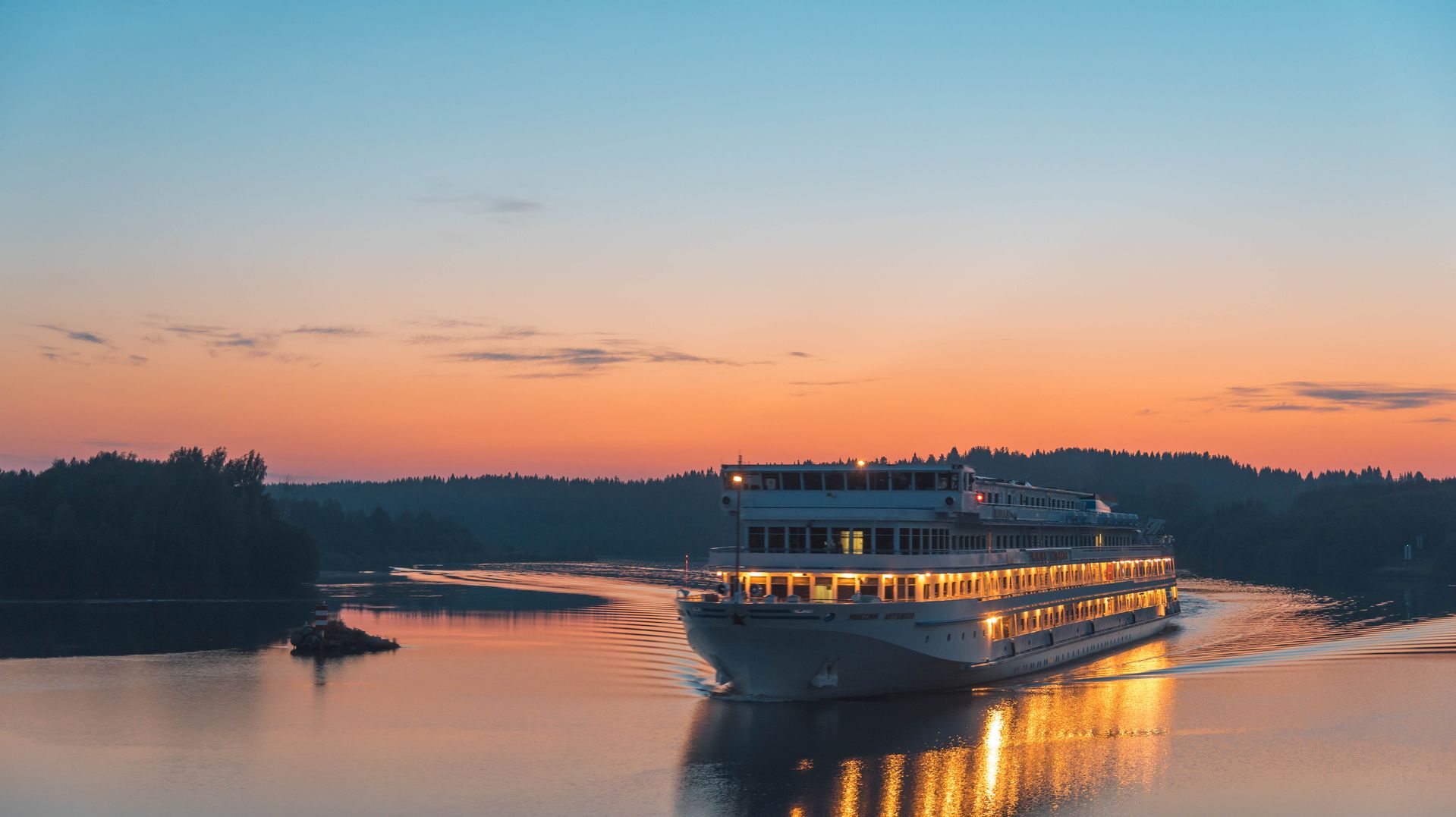

There is a quality of attention that river travel produces that other formats struggle to replicate. The landscape does not flash past at altitude or blur through a car window. It arrives slowly, at a pace calibrated to human perception, close enough to read the detail of a riverside village, a medieval bridge, a vineyard climbing a hillside above the water. River cruises place you inside a landscape rather than above or beside it, and that difference in relationship to the geography being traveled through produces a fundamentally different quality of experience.
River cruising has grown from a niche category pursued by a relatively small and predominantly older demographic into one of the most dynamic segments of the broader travel market, attracting a widening range of travelers who have discovered that the format delivers something genuinely distinct from ocean cruising, land-based touring, and independent travel through the same regions. The ships are small, the destinations are culturally dense, the pace is unhurried without being inactive, and the combination of comfortable accommodation with daily immersion in some of the world’s most historically significant landscapes has proven broadly and durably appealing.
Understanding what river cruises actually deliver, which rivers and itineraries offer the richest experiences, which lines lead the market, and how to approach the decision of booking one is the foundation for any traveler considering this format for the first time or looking to deepen their engagement with a category they have already sampled.
What River Cruises Actually Offer
The structural difference between a river cruise and an ocean cruise begins with the ship. River cruise vessels are constrained by the dimensions of the waterways they navigate, which means they are long and relatively narrow, typically carrying between 100 and 200 passengers on European rivers, with larger vessels operating on wider waterways like the Mekong, the Nile, and the Amazon. This scale produces an intimacy that ocean ships, even small luxury ones, cannot match. Fellow passengers become recognizable within the first day. The onboard atmosphere resembles a well-run house party more than a floating resort. And the absence of the vast entertainment infrastructure that ocean ships require to keep thousands of passengers occupied means that river cruise ships invest their space and their budgets differently, in comfortable public areas, quality dining, and the kind of thoughtfully designed cabins that make returning to the ship after a day ashore genuinely pleasant.
The itinerary rhythm of river cruises is their most distinctive quality. Ships dock in the center of towns and cities rather than at distant cruise terminals requiring transport to reach the destination proper. Waking up moored alongside the old town of a medieval German city, stepping off the gangway directly onto a historic riverside promenade, and returning in the evening to a comfortable cabin a few steps from where you spent the day: this is a travel rhythm that land-based touring cannot replicate and that ocean cruising, with its tendering and its terminal logistics, rarely achieves. The destination is immediate and the ship is genuinely convenient rather than a staging point that requires its own navigation.
Included excursions are standard in the river cruise model, with most lines providing guided shore programs at each port of call within the cruise fare. This differs from ocean cruising, where excursions are typically an additional cost, and it means that the total cost of a river cruise, once excursions are factored in, compares more favorably with the headline fare differential relative to ocean alternatives than it initially appears. The quality of those included excursions varies between lines, and the better operators have invested in excursion programs that go beyond standard city walking tours to include access, specialist guides, and experiences that independent travelers would struggle to organize.
The Rivers That Define the Category
The Rhine and Moselle in Central Europe represent the heartland of the river cruise market, and their continued popularity reflects the genuine richness of what they offer. The Rhine corridor between Amsterdam and Basel passes through some of the most historically layered landscape in Europe: the Dutch waterway cities with their canal architecture and world-class museums, the German Rhine gorge with its concentration of medieval castles above vine-covered slopes that produce some of the world’s most distinctive Rieslings, the Alsatian towns that bear the cultural imprint of centuries of French and German alternation, and the Swiss approach to Basel with its exceptional art institutions and its position at the meeting point of three countries. A Rhine river cruise is not simply a scenic passage. It is a journey through the core geography of European civilization.
The Danube, flowing from Germany through Austria, Slovakia, Hungary, Croatia, Serbia, Bulgaria, and Romania to the Black Sea, offers river cruises of greater geographic ambition and greater cultural variety than any other European waterway. The classic Central European itinerary between Nuremberg or Passau and Budapest passes through Linz, the Wachau Valley with its apricot orchards and ancient monasteries above the river, Vienna, and the Slovak and Hungarian capitals, combining outstanding natural scenery with cultural capitals of the first order. Eastern European extensions through the Iron Gate gorge, the Balkans, and the Danube Delta add dimensions of history, landscape, and cultural encounter that the western segments, for all their beauty, do not contain.
The Rhône and Saône in southern France offer river cruises through some of the most important food and wine country in the world, from Lyon, widely regarded as the gastronomic capital of France, south through the Rhône Valley’s celebrated wine appellations to the Provençal landscape around Avignon and Arles. River cruises on this itinerary attract a strongly food and wine-focused passenger profile, and the better operators have built their excursion programs explicitly around culinary and viticultural experiences that align with why their passengers chose this particular river.
The Douro in Portugal, cutting through the dramatic schist terraces of the port wine country in the country’s north, offers river cruises of extraordinary visual impact on a river whose physical scale is more modest than the great Central European waterways. Ships on the Douro are smaller, constrained by the river’s locks and its depth in certain sections, and the intimacy of the experience reflects that scale. Quinta stays, port wine lodge visits, and the particular quality of the Douro landscape at different times of day produce river cruise itineraries whose devoted following is disproportionate to the river’s size.
Southeast Asia’s river cruise market is centered on the Mekong, which flows through Myanmar, Laos, Thailand, Cambodia, and Vietnam before reaching the sea. Mekong river cruises operate on a different scale and with a different character from their European counterparts: larger rivers, longer distances, greater cultural diversity, and a pace of life along the riverbanks that feels genuinely remote from the contemporary world in a way that European rivers, however beautiful, do not. Cruising between the temples of Angkor Wat and the colonial streetscapes of Hội An or Hanoi, with days spent on the water passing through landscapes of rice paddies, floating villages, and forested hills, offers a river cruise experience that European itineraries cannot approximate.
Egypt’s Nile remains one of the world’s iconic river cruise routes, connecting the temples and tombs of Luxor and the Valley of the Kings with the monuments of Aswan and Edfu in a journey through the birthplace of one of humanity’s oldest civilizations. Nile river cruises operate within a concentrated cultural landscape whose density of ancient monuments is unmatched anywhere on earth, with the river serving as the organizing axis of Egyptian civilization across four millennia and the ships providing comfortable bases for daily temple visits of extraordinary richness.
The Amazon, the Irrawaddy in Myanmar, the Chobe in Botswana, and the Mississippi in the United States all support river cruise operations of varying scale and character, extending the format’s geographic reach into landscapes and cultures of enormous diversity. The Amazon in particular has attracted investment from luxury operators who have recognized that the combination of extraordinary biodiversity and the navigational access that a ship provides to remote river communities and wildlife habitats makes it one of the world’s most compelling expedition river cruise destinations.
The Lines That Lead the Market
Viking River Cruises has built the largest fleet in the European river cruise market and the highest brand recognition in the category among North American travelers, achieved through consistent product quality, significant marketing investment, and a programming philosophy that emphasizes cultural immersion and intellectual engagement alongside physical comfort. The line’s ships are well-designed, the included excursion programs are substantive, and the onboard atmosphere is convivial without being forced. Viking’s dominance in the North American source market means that its ships carry a strongly American and Canadian passenger profile, which suits many travelers and may not suit others.
AmaWaterways occupies a position in the river cruise market distinguished primarily by its culinary program, which is consistently rated among the strongest in the category, and by its active excursion options that include cycling and hiking alternatives to standard walking tours, making the line particularly well-suited to younger and more physically active river cruisers. The line’s ships are well-appointed, the service standard is high, and the itinerary portfolio covers the major European rivers with sufficient depth and the key Asian routes with growing confidence.
Scenic and its sister brand Emerald Cruises represent the Australian-founded operator that has invested significantly in the product quality of its river cruise fleet, with all-inclusive pricing that encompasses drinks, gratuities, excursions, and a range of onboard amenities that competitors charge additionally for. The Scenic Space-Ships, as the fleet’s top-tier vessels are marketed, feature design elements including indoor-outdoor pool areas and butler service suites that push the boundaries of what river cruise ships have previously offered.
Uniworld Boutique River Cruise Collection has built a distinct identity around the interior design of its ships, which are individually styled to reflect the character of the rivers and regions they sail, with art collections, fabric choices, and decorative elements that make each vessel genuinely different from the others in the fleet. The approach attracts a design-conscious passenger profile and produces onboard environments that photograph exceptionally well, though the quality of the itinerary programming and service culture is what sustains the line’s loyal repeat passenger base.
Avalon Waterways has differentiated its fleet through the Panorama Suite concept, which features floor-to-ceiling sliding glass walls that open the cabin to the outside air and the passing landscape in a way that conventional cabin windows cannot achieve. The innovation addresses one of the inherent tensions in river cruise design, the desire to be visually connected to the landscape from the comfort of a cabin, with a solution that has influenced the broader market’s approach to cabin design.
Crystal River Cruises, Tauck, and Abercrombie and Kent all operate at the upper end of the river cruise market with smaller fleets, higher price points, and product propositions calibrated to travelers for whom service quality and exclusivity are the primary selection criteria. These lines attract experienced travelers who have sampled the mainstream river cruise market and are looking for a step up in the intimacy and quality of the experience.
Choosing a River Cruise Itinerary
The itinerary decision in river cruising is more consequential than in most travel categories because the ship does not move between distant destinations in the way an ocean cruise does. A river cruise covers a defined geographic corridor, and the appeal of that corridor, its history, landscape, culture, and the specific towns and cities it passes through, determines the quality of the experience more directly than the ship itself, however well-appointed.
Matching itinerary to genuine interest produces better river cruise experiences than choosing a ship or a line and accepting the itinerary that comes with it. A traveler deeply interested in the history of the Second World War will find itineraries along the Rhine and Danube that engage directly with that history more rewarding than a culinarily focused Rhône itinerary, however excellent the food. A traveler whose primary motivation is wine will find the Douro, the Rhône, or the Mosel more aligned with their interests than the Mekong, whose extraordinary qualities are cultural and natural rather than viticultural.
Season is a significant variable in European river cruising in ways that it is less so for ocean itineraries. Water levels on European rivers fluctuate considerably across the year, and low water conditions in summer or high water in spring can affect itineraries, sometimes requiring coaches to substitute for the ship on certain sections. The Christmas market season in late November and December is the most in-demand period on Central European river cruise itineraries, with departures selling out well in advance and prices reflecting that demand. Spring and early autumn offer comfortable temperatures, manageable crowds at the major sites, and water levels that are typically reliable for full itinerary execution.
First-Time River Cruise Considerations
Travelers approaching river cruises for the first time frequently arrive with questions about the cabin configuration of river cruise ships, which differs from ocean ships in ways that warrant understanding before booking. The long, narrow design of river cruise vessels means that cabins on the lowest deck, the main deck, have windows that sit at or near the waterline, providing light but limited view. The middle deck, typically called the middle or upper deck depending on the line, provides balcony or French balcony cabins with better views at a premium over main deck pricing. The top suites, on the highest passenger deck, offer the most unobstructed views and typically the most generous space.
The French balcony, a floor-to-ceiling sliding glass door that opens to the outside without a physical balcony to step onto, is the most common cabin feature at the middle tier on modern river cruise ships. It provides the sensation of open air and the sound and smell of the river without the structural compromise that a true balcony imposes on a vessel whose width is constrained. True outdoor balconies exist on some ships but are rare because the width restriction makes them spatially challenging to incorporate without reducing cabin interior dimensions.
Motion sickness, a concern some travelers raise when considering any form of water travel, is rarely a significant issue on river cruises. The protected waterways of European rivers produce minimal movement even in varied weather conditions, and the gentle pace of river travel bears no comparison to the motion dynamics of ocean sailing. Travelers who have experienced discomfort on ocean vessels typically find river cruises entirely comfortable.
Why River Cruises Keep Growing
The trajectory of the river cruise market reflects a genuine alignment between what the format offers and what a widening range of travelers are looking for. The combination of cultural density, logistical ease, unhurried pace, and the particular quality of attention that moving through a landscape at water level and river speed produces has proven appealing across a broader demographic range than the format’s original market anticipated.
Travelers who have spent years accumulating stamps in their passport and sights on their itinerary often find, at a certain point in their travel lives, that going deeper matters more than going further. River cruises are architecturally suited to that preference. They cover less ground than a land-based tour and see fewer headline destinations than a multi-stop itinerary, but they see what they see with a quality of attention and a depth of immersion that faster formats cannot replicate.
The river, in the end, sets the pace. And for travelers who have spent long enough moving at the speed of airports and schedules and must-see lists, the experience of surrendering that pace to the current turns out to be exactly what they were looking for.