

The tournament happens every four years. The planning mistakes happen much more often than that.
There is a specific category of travel that sits apart from ordinary trips, where the destination is not quite the point and the event is everything. The destination matters, certainly, it shapes the logistics, the culture, the experience between matches, and the quality of a hundred incidental hours that surround the football itself, but the organizing principle of the whole journey is a tournament that happens in eight stadiums across multiple cities over a month, and the traveler who doesn’t understand that distinction tends to plan for the wrong thing.
World Cup travel is the largest single event in global sports tourism, drawing hundreds of thousands of international visitors to the host country across six weeks, and it generates a planning challenge that is meaningfully different from any other football trip. Tickets, accommodation, transport, and the experience of the tournament itself all operate according to logistical realities that don’t apply to club football, to other major tournaments, or to most events of comparable scale. The gap between a World Cup trip that delivers what it promises and one that costs an extraordinary amount of money while delivering a fraction of the intended experience is almost entirely a function of how the planning was approached, and when.
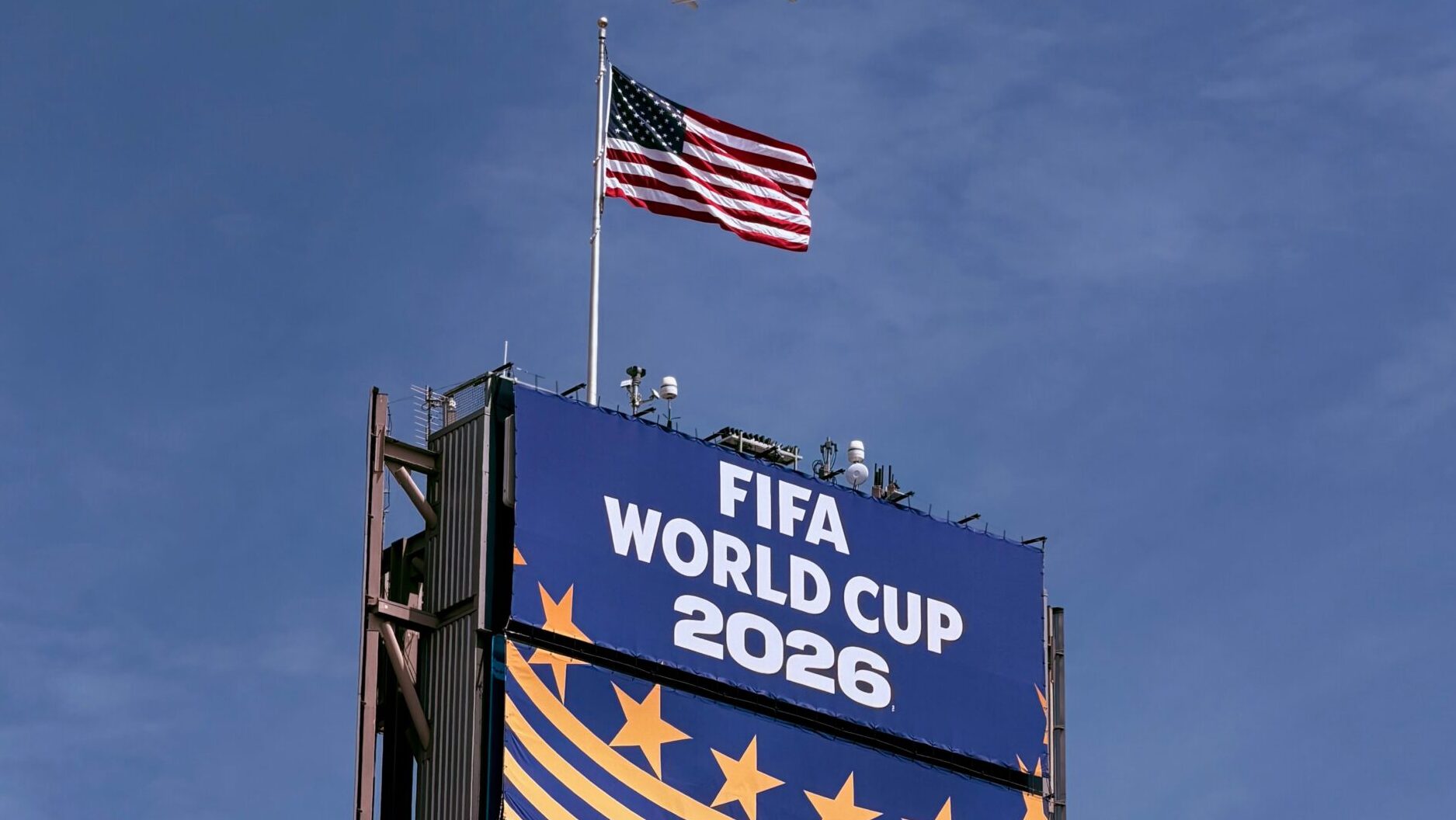
The 2026 World Cup, hosted across the United States, Canada, and Mexico in the first three-nation hosting arrangement in the tournament’s history, adds a layer of logistical complexity that previous single-nation editions didn’t carry, and understanding that complexity early is the first genuinely useful thing a prospective traveler can do.
The Ticket Reality
FIFA’s ticketing process for the World Cup is, by any reasonable assessment, one of the most frustrating booking experiences in sports travel, and the frustration begins with the gap between the number of people who want tickets and the number available.
The demand for World Cup tickets at each edition consistently and significantly exceeds the available supply, meaning that the majority of people who apply through the official FIFA ballot do not receive the tickets they requested. This is not a glitch or a failure of process; it is a structural feature of a tournament where the total stadium capacity across all matches is a fraction of the global demand. Understanding this before beginning the process calibrates expectations in a way that prevents the specific disappointment of treating official ballot entry as the primary or only strategy.
The official process operates in phases, typically beginning with a ballot period well over a year before the tournament where applicants request tickets for specific matches or session-based access without choosing specific games. Successful ballot entrants are allocated tickets at a later stage and charged for what they receive. Subsequent sales phases release additional inventory as it becomes available, and last-minute sales in the weeks before and during the tournament release returned and unallocated tickets through the official platform.
Each of these phases rewards early engagement and careful attention to the official FIFA ticketing communications, which are the only authoritative source of information about what is available and when. Secondary market tickets exist for every World Cup, some through officially recognized resale partners and some through entirely unofficial channels that carry the full range of risks from inflated pricing to outright fraud. Checking what official resale mechanisms FIFA has established for any given edition is worth doing before considering any secondary purchase, as the landscape varies between tournaments.
The practical strategy for travelers who don’t receive tickets in the early ballot phases is not to give up but to remain engaged with subsequent sales phases, to be flexible about which matches are acceptable rather than requiring a specific team’s games, and to understand that group stage matches involving less prominent nations are considerably easier to obtain than knockout stage matches or games involving the largest football nations.
The Accommodation Calculation
World Cup accommodation is characterized by two problems that interact with each other in ways that make planning genuinely difficult: prices that bear no relationship to normal market rates in the host cities, and supply that is absorbed months or years in advance at those inflated prices.
The pricing inflation at host cities during a World Cup is significant and predictable, reflecting basic supply and demand dynamics in a market where tens of thousands of international visitors are competing for the same limited hotel inventory during the same weeks. Hotels in cities hosting matches adjust rates to reflect this demand, and the adjustment can be substantial relative to normal pricing. Accepting this as a feature of the travel rather than a problem to be avoided by finding the right platform or the right discount produces a more realistic budget than the alternative.
The supply problem is less well understood but equally significant. A meaningful proportion of hotel inventory in World Cup host cities is committed to FIFA, its official partners, broadcasters, and corporate hospitality programs well before public sales open, which means that the available inventory when general public booking becomes possible is already reduced from what a normal event would leave available. For the 2026 edition in particular, the distribution of matches across venues in three countries means that accommodation pressure is more widely dispersed than in single-nation editions, but is present across a larger number of cities simultaneously.
The practical response to both problems is the same: book as early as the match schedule allows, which means as soon as the group draw is known and the venue schedule for each team’s games becomes clear. Accommodation that seems expensive booked fourteen months in advance will in most cases be more expensive, not less, as the tournament approaches and remaining inventory tightens. The refundable versus non-refundable calculation matters here more than in ordinary travel: booking refundable accommodation early and converting to a non-refundable rate as the plans solidify, or rebooking to take advantage of better-positioned properties as they release inventory, is a more sophisticated approach than either booking non-refundably too early or waiting too long for rates to improve.
Private accommodation through rental platforms has historically provided an alternative to the hotel market at major tournaments, and the 2026 edition is likely to see significant inventory of this kind available across all three host nations, with the particular advantage that houses and apartments provide space for groups that hotel rooms don’t accommodate naturally. The trade-offs are the standard ones of private rental: less reliable than hotels for last-minute changes, variable in quality relative to their listing descriptions, and subject to the same demand-driven pricing inflation as the hotel market.
Understanding the 2026 Host Country Complexity
The 2026 World Cup’s three-nation format creates logistical considerations that no previous edition has required travelers to navigate, and they are worth thinking through carefully before any itinerary is committed to.
The United States is hosting the majority of matches, with sixteen American cities selected as potential venues and the final to be played at MetLife Stadium in the New York metropolitan area. Canada is hosting in Toronto and Vancouver, and Mexico in Mexico City, Guadalajara, and Monterrey. The geographic spread across three countries means that following a team through multiple group stage games could involve crossing international borders, clearing customs, and managing the cost and complexity of trans-continental air travel within a compressed timeline.
The United States alone covers enough geographic territory that two consecutive matches played in different American host cities might require a flight that takes four or five hours, arriving in a city that operates in a different time zone and has different accommodation market characteristics than the previous one. Travelers who approach this as they would a European tournament, where consecutive match venues might be two hours apart by train, will find themselves with itineraries that don’t actually work in the time available.
The practical approach is to plan around a base city rather than attempting to follow a team to every venue. Selecting one or two host cities, attending whatever matches are accessible from those bases, and accepting that some games will be followed by broadcast rather than in person, produces a more coherent and more enjoyable trip than an ambitious multi-city itinerary that turns the tournament into a series of airports and hotel check-ins.
The Experience Between Matches
The match itself is typically three hours of the day. What happens in the remaining twenty-one hours is what determines whether the trip is genuinely memorable or merely expensive, and the travelers who plan only for the football tend to find that the hours between matches, particularly during the group stage when there might be three or four days between games, require more thought than they gave them.
The 2026 host cities vary enormously in what they offer the visiting football fan between matches. New York and Los Angeles offer the depth of major world cities that can absorb days of exploration without repetition. Mexico City combines one of the world’s great urban cultural experiences with a football atmosphere rooted in decades of passionate domestic football culture that gives the tournament a different character than American host cities. Canadian venues in Toronto and Vancouver offer cities of genuine quality that don’t always receive their due in international travel conversations.
Fan zones, the official gathering spaces set up by FIFA and host cities outside the stadiums, are worth knowing about as spaces where matches involving any nation can be watched in a collective atmosphere that replicates some of the social experience of the stadium without requiring a ticket. At previous editions these have ranged from genuinely atmospheric to disappointingly functional, and their quality in 2026 will depend partly on host city investment and partly on where in the tournament’s arc the traveler encounters them.
Local football culture in the host cities adds a dimension that the most memorable World Cup trips tend to be shaped around. Traveling to a city where football is woven into daily life, watching local bars fill with fans from a dozen nations, eating and drinking alongside people for whom the tournament has reorganized everything for a month: these are the experiences that World Cup travelers describe years afterward, not always the matches themselves.
The Budget Conversation Nobody Wants to Have Early Enough
A World Cup trip is expensive in ways that are predictable but often not honestly accounted for until the costs are already committed. Tickets, accommodation at inflated tournament rates, flights to and between host cities, food and drink in cities that may be significantly more expensive than the traveler’s home market, ground transport, and the incidental costs of six weeks of international travel add up to a total that most people underestimate at the planning stage.
Running an honest full cost estimate before any individual booking is made, rather than adding up what has been spent after each commitment, produces a clearer picture of whether the trip as envisioned is financially viable and where trade-offs need to be made. The trade-offs that tend to preserve the most important parts of the experience are those that prioritize match tickets and base accommodation and treat everything else as adjustable, rather than those that compromise on either of those two things to preserve spending in other categories.
The trip is worth doing, for the traveler who wants to do it, at a realistic rather than an optimistic cost. The World Cup happens every four years, and the combination of football at its highest stakes, the specific atmosphere of cities temporarily transformed by a global tournament, and the social experience of traveling alongside fans from every nation on earth is genuinely unlike anything else in sports travel. Getting the planning right is what determines whether the cost, which will always be substantial, produces an experience that justifies it.